

Human rights are basic freedoms and protections that every person has from birth.
The Universal Declaration of Human Rights (UDHR) states that:
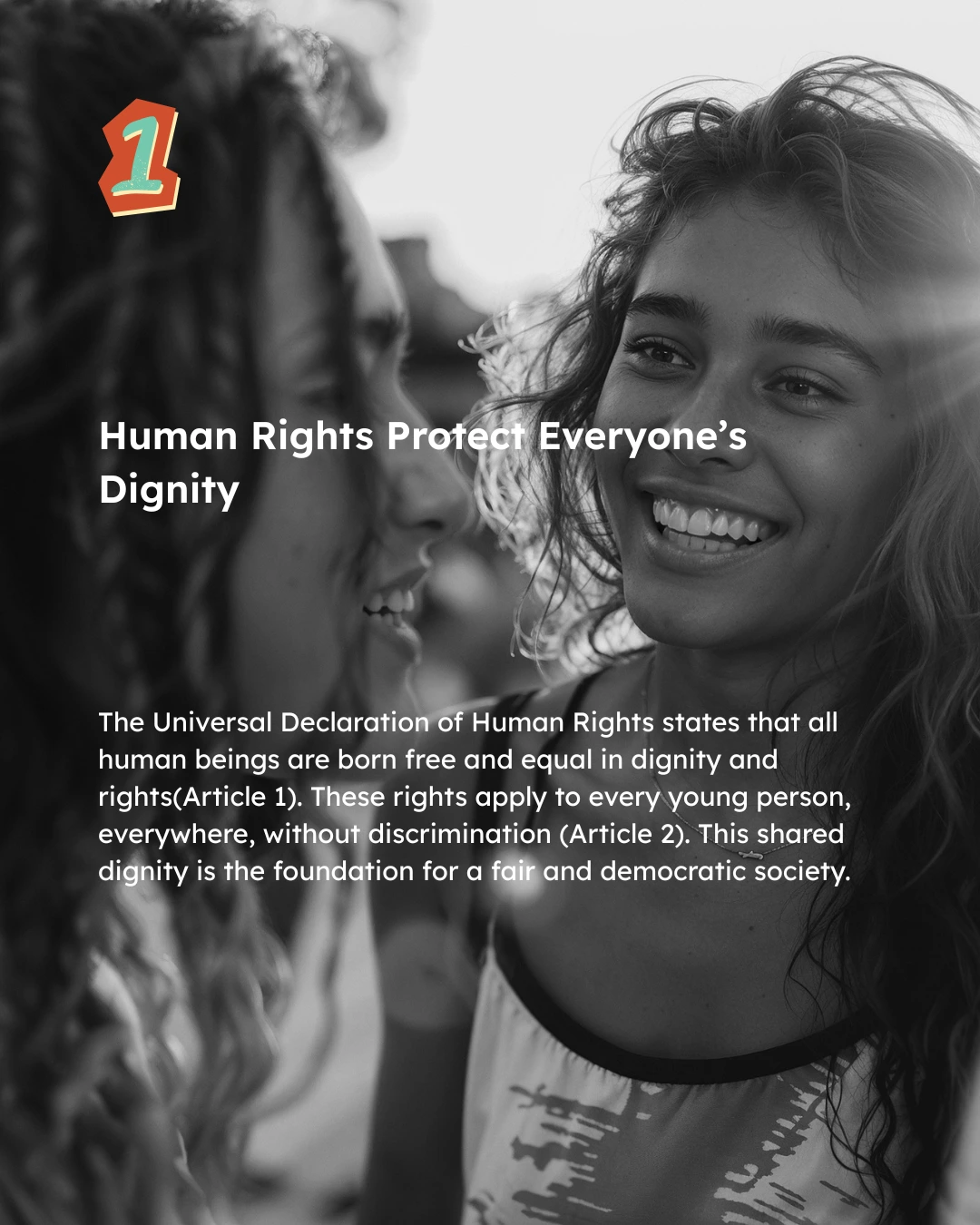
All human beings are born free and equal in dignity and rights (Article 1).
These rights apply to everyone, with no exceptions or discrimination (Article 2).
This means that no matter your background, identity, or beliefs, you have the same right to be safe, respected, and heard. Human rights create the foundation for a society where people can live freely and develop their potential.
Democracy is much more than voting once every few years. A healthy democracy depends on the rights protected in the UDHR.
For example:
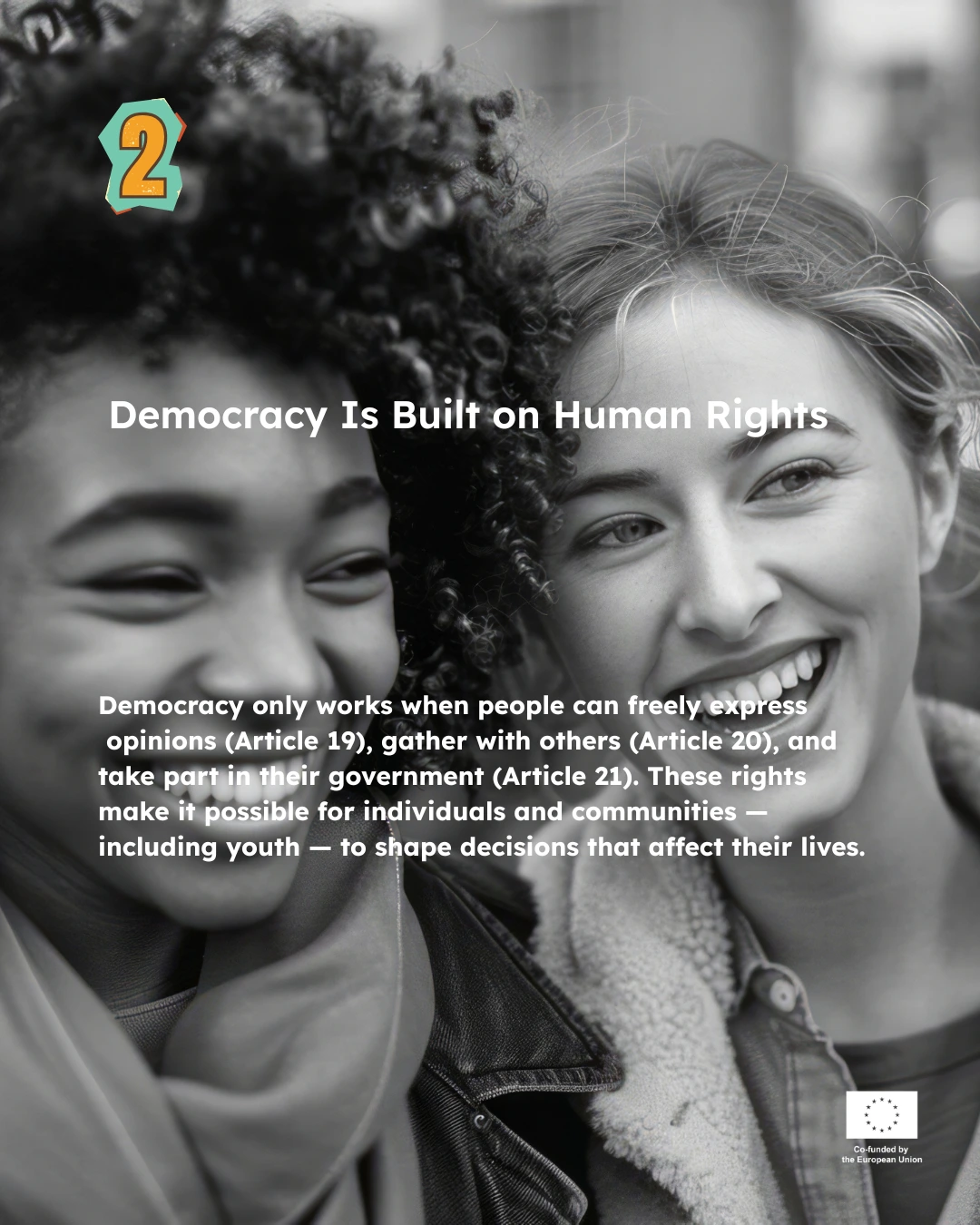
Freedom of opinion and expression (Article 19) allows people to speak up, debate ideas, and share their perspectives.
Freedom of peaceful assembly and association (Article 20) allows people to join groups, movements, or protests.
The right to take part in government and public affairs (Article 21) ensures that the will of the people guides political decisions.
Without these rights, democracy cannot function. Human rights give democracy its meaning: they ensure that participation is open, fair, and inclusive. They protect minorities, ensure equal treatment, and prevent abuses of power.
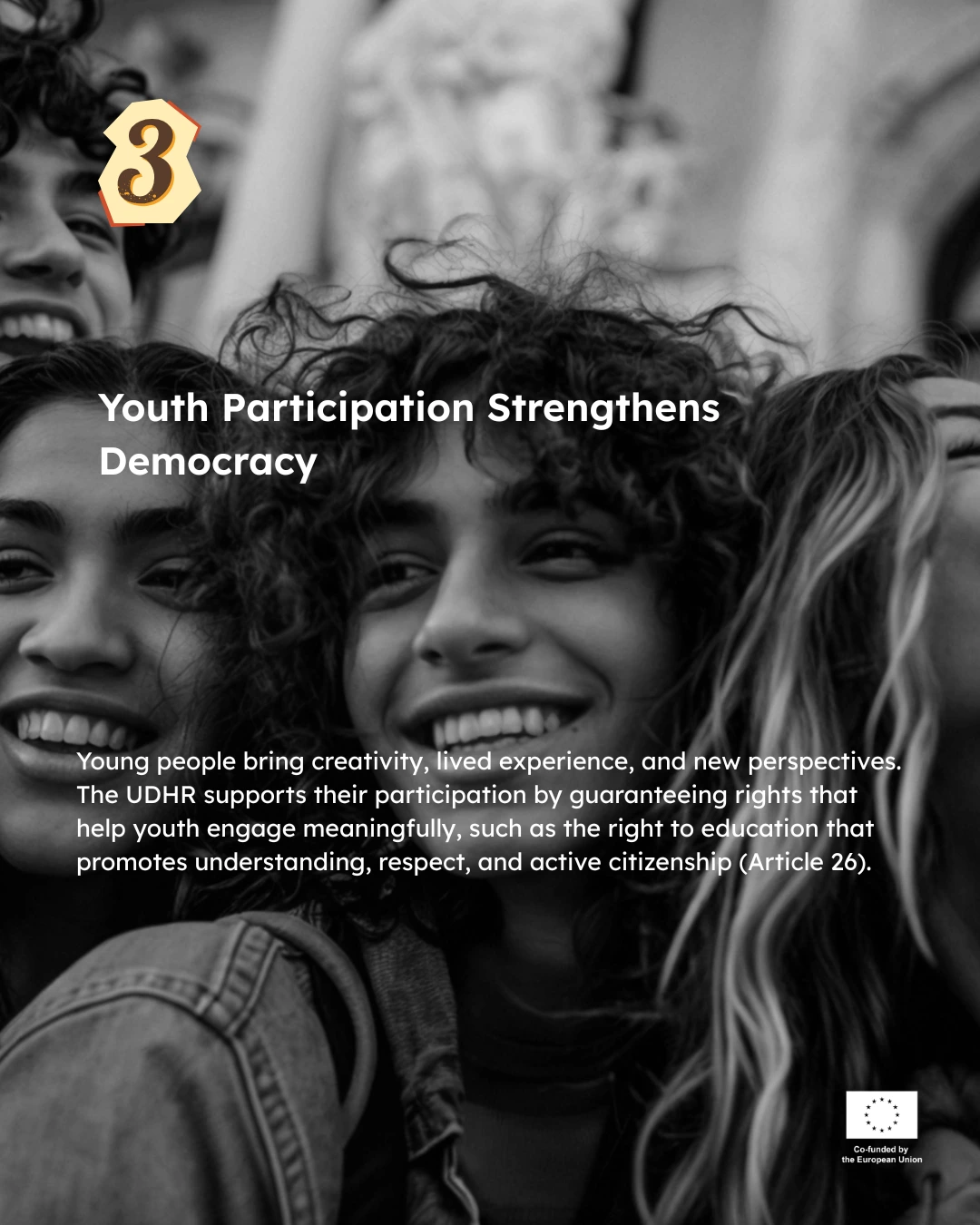
Young people are not just “future citizens” they are citizens now. They experience social, economic, and political issues directly and have innovative ideas for addressing them. The UDHR reinforces youth participation by guaranteeing rights such as:
Education that promotes understanding, tolerance, and respect (Article 26).
Freedom to express ideas and seek information (Article 19).
The right to participate in cultural and community life (Article 27).
Even though the UDHR does not mention youth explicitly, its principles clearly support the idea that young people must have space to participate in shaping society.
When young people know their rights, they can:
Challenge discrimination and inequality.
Participate in youth councils, school parliaments, or local decision-making.
Express their political opinions online or offline.
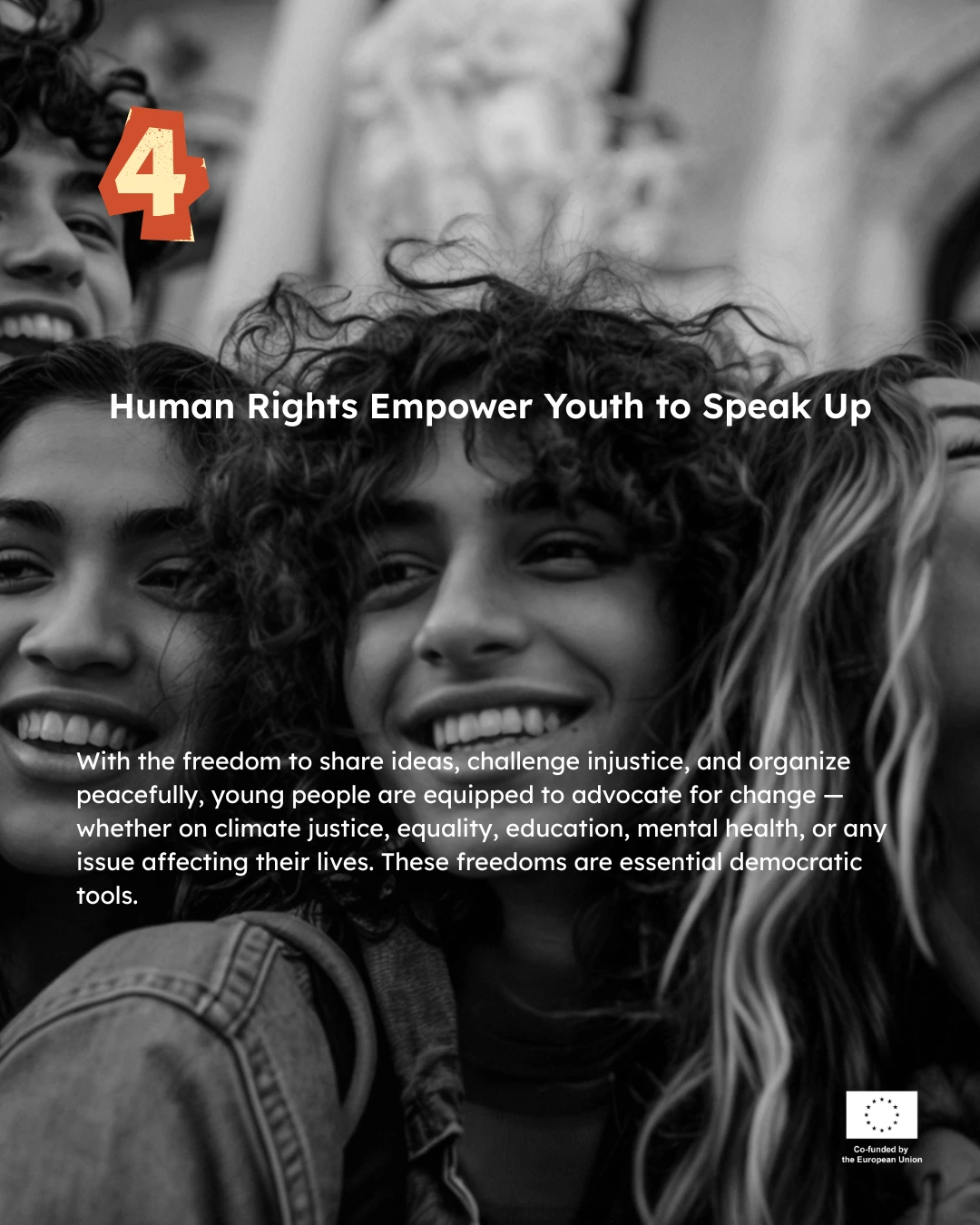
Advocate for issues like climate justice, LGBTQ+ rights, migration, education, or mental health.
Hold governments and institutions accountable.
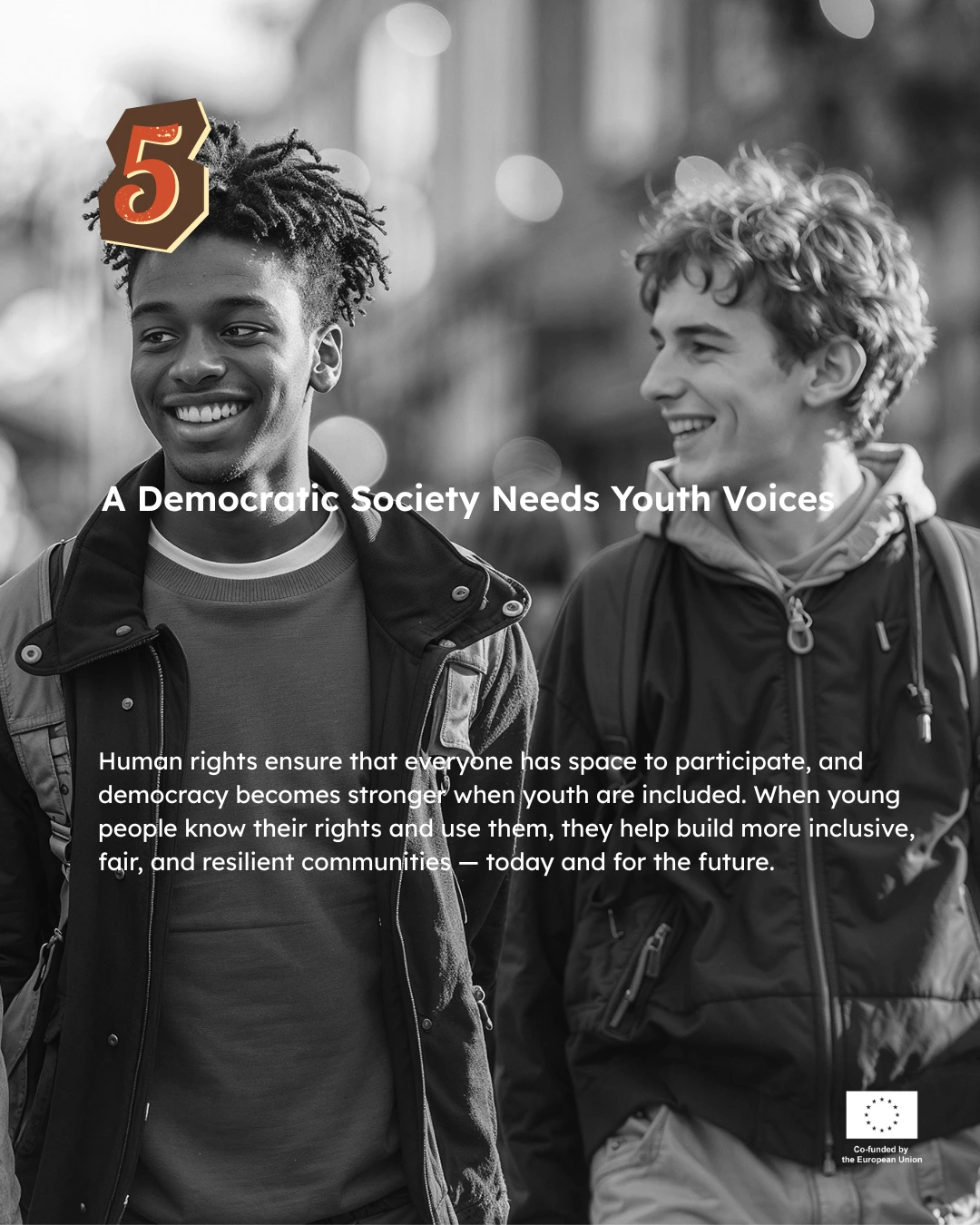
Democracy becomes stronger when youth are not only allowed but encouraged to take part. This is exactly the spirit of the rights to expression, assembly, and participation protected in the UDHR.
Around the world, many young people feel unheard or disconnected from politics. The UDHR reminds us that participation is not optional, it’s a right. Democracy needs the energy, creativity, and perspectives of youth to solve today’s challenges and build a fairer, more inclusive society.
The Universal Declaration of Human Rights provides the basis for freedom, equality, and dignity for all. Democracy turns these principles into everyday practice. And youth participation ensures that societies evolve, stay dynamic, and reflect the needs of everyone. When young people know their rights and use their voices, they keep democracy alive.

Funded by the European Union. Views and opinions expressed are however those of the author(s) only and do not necessarily reflect those of the European Union or the European Education and Culture Executive Agency (EACEA). Neither the European Union nor EACEA can be held responsible for them.