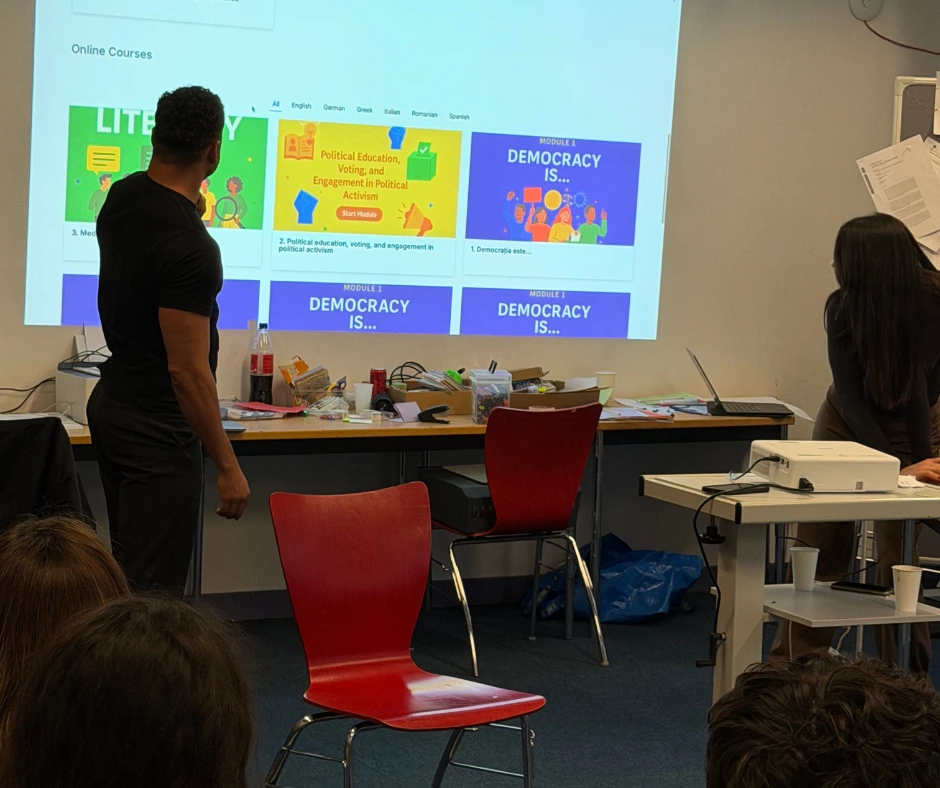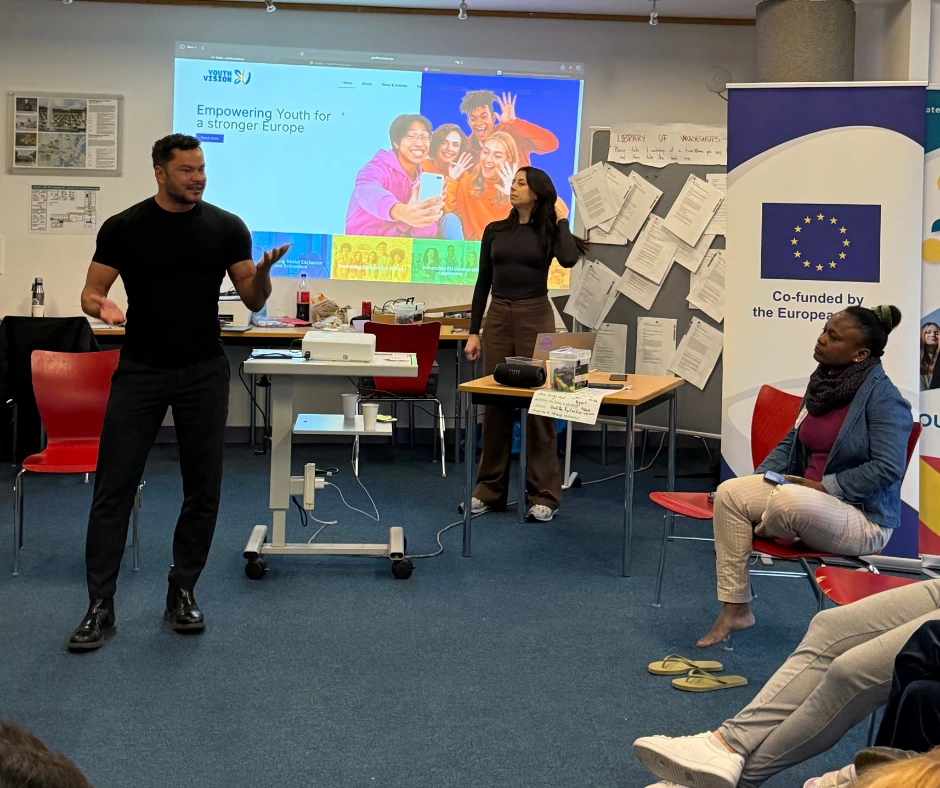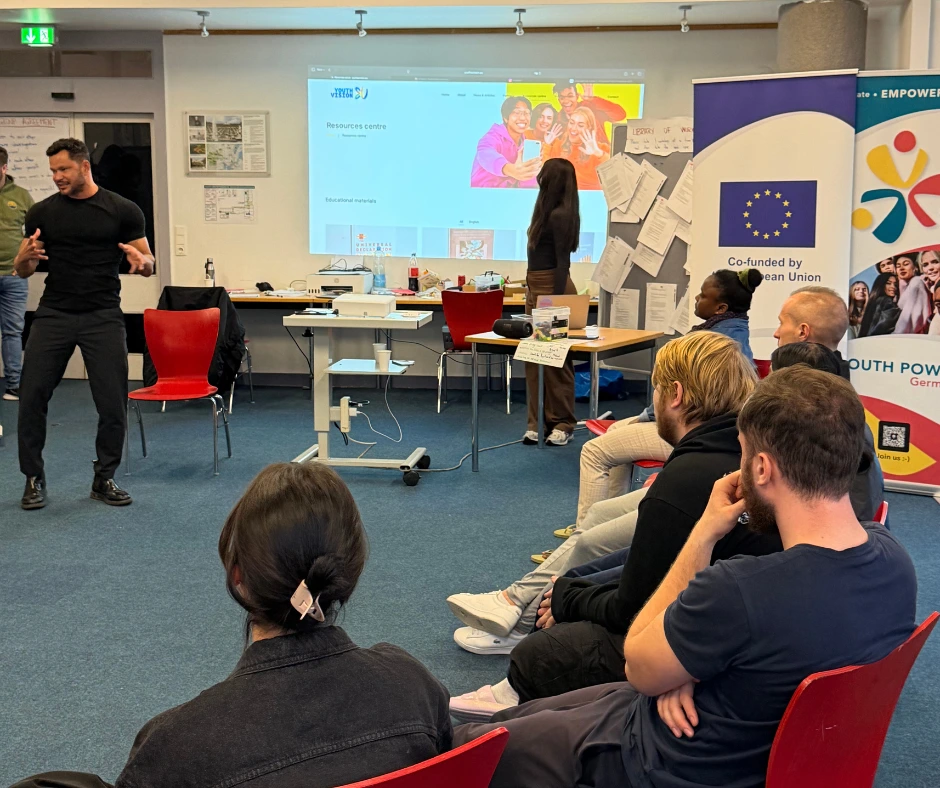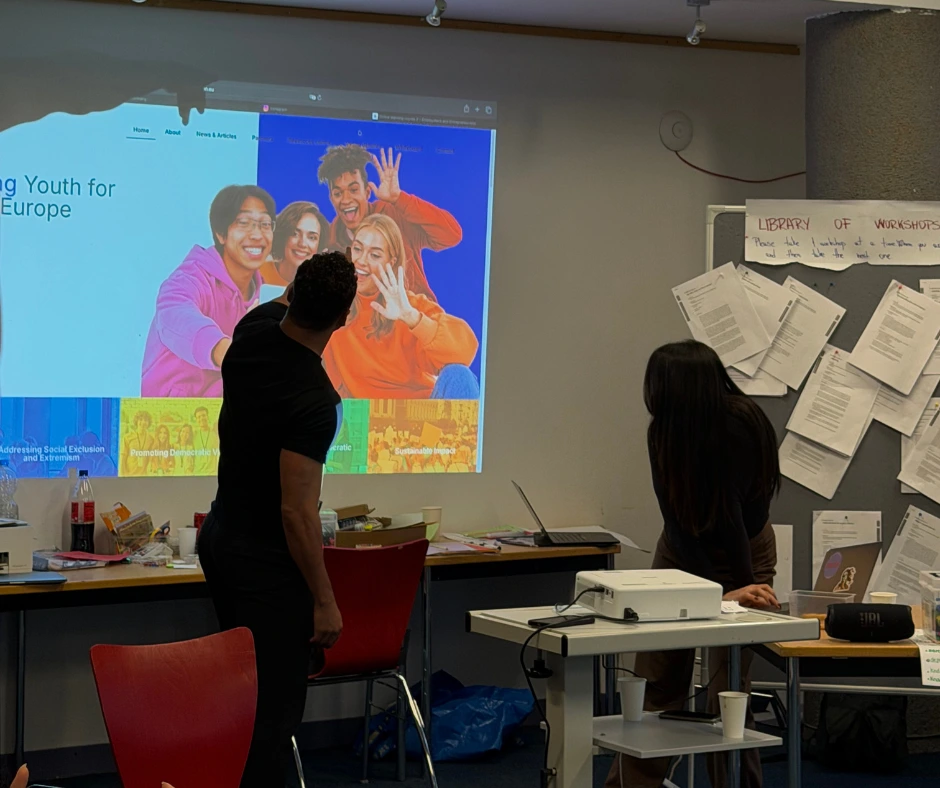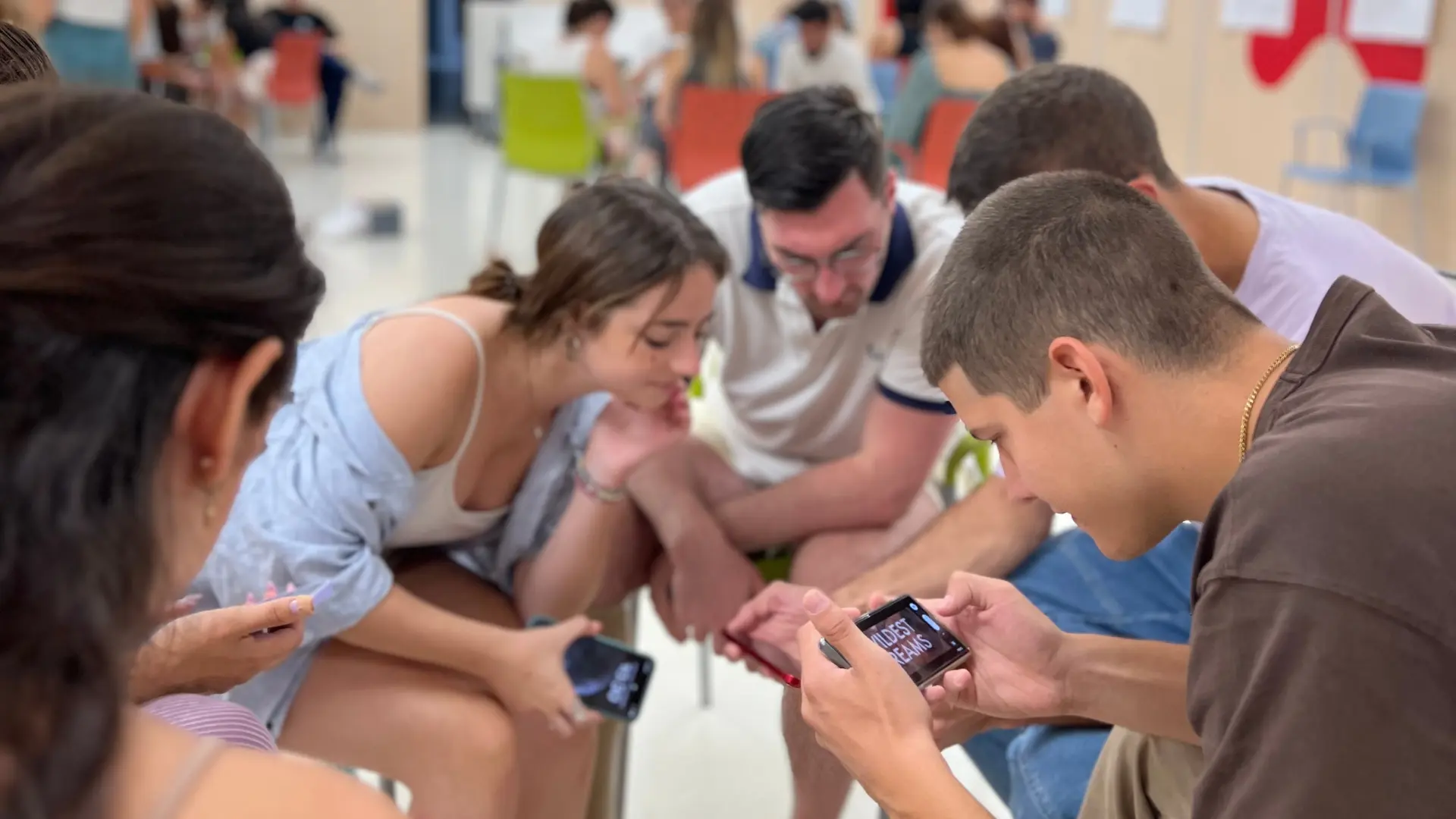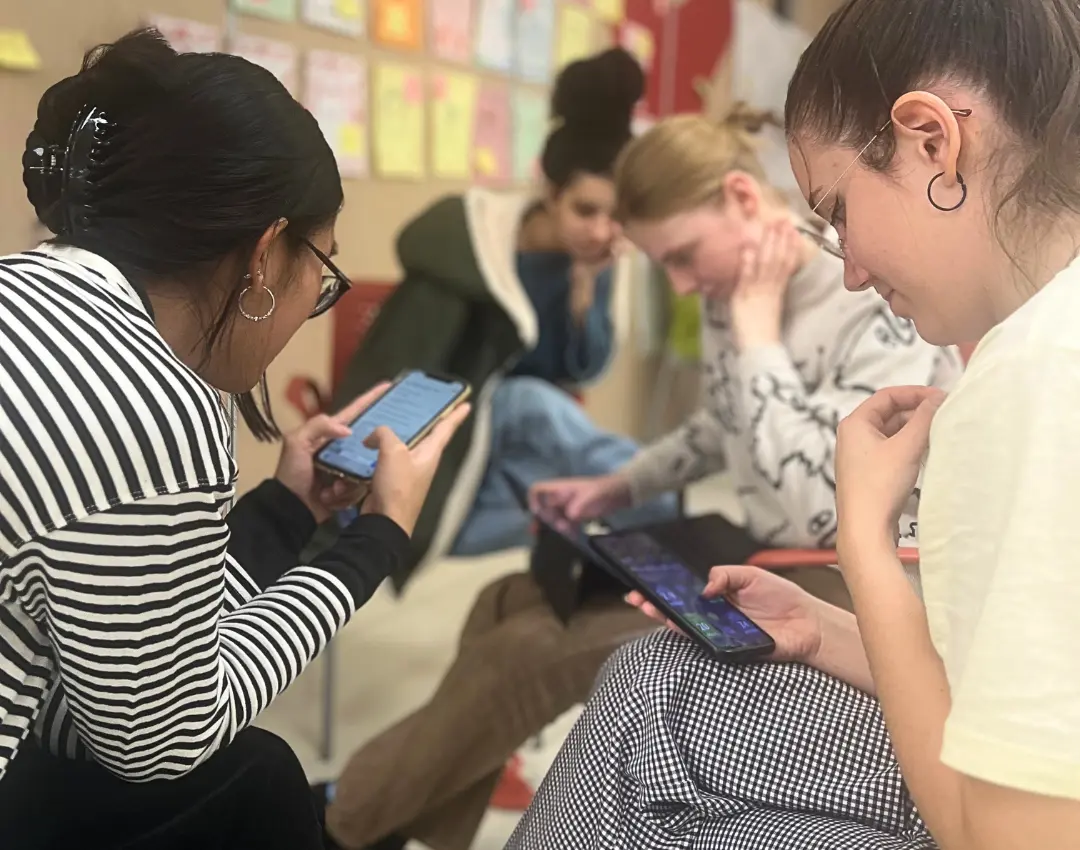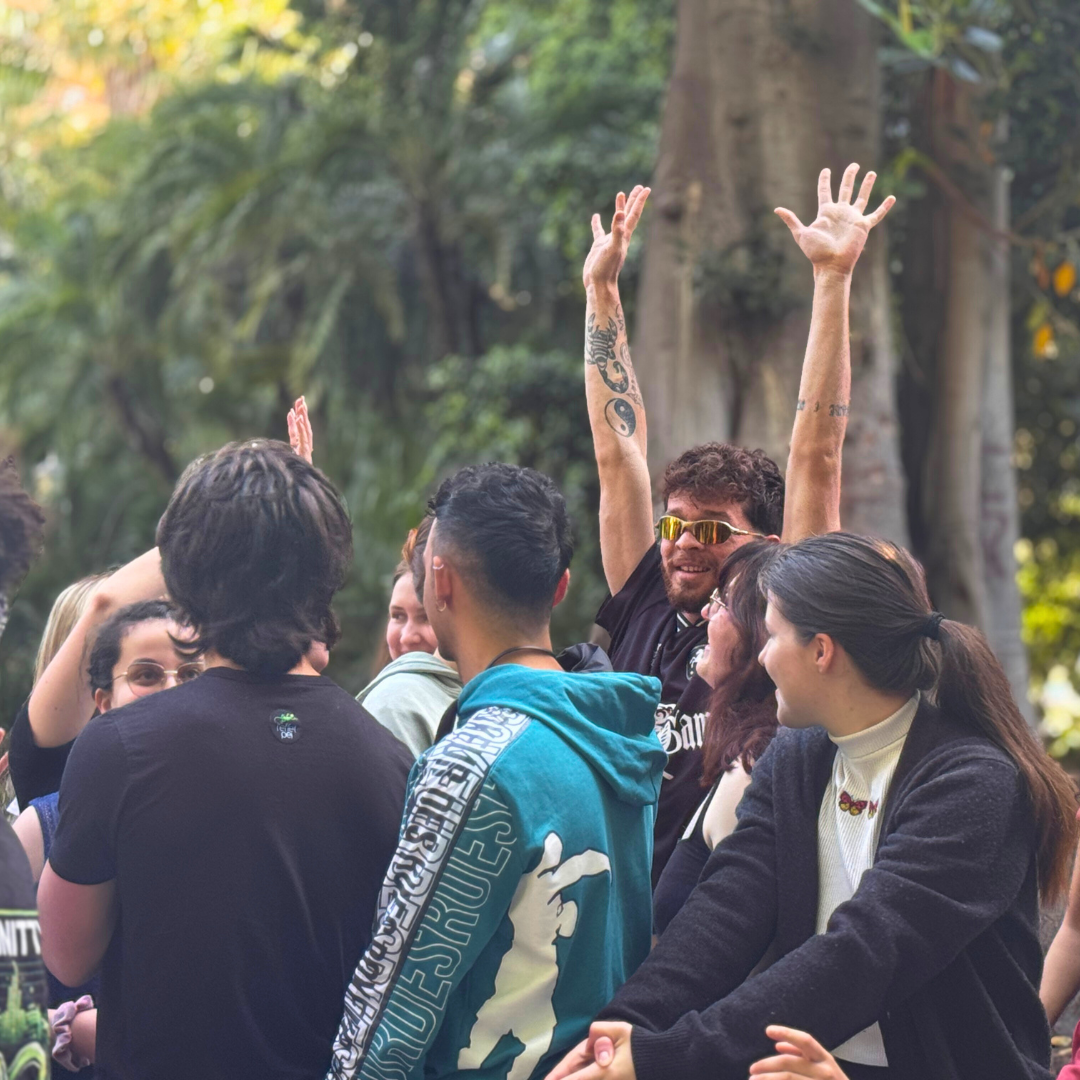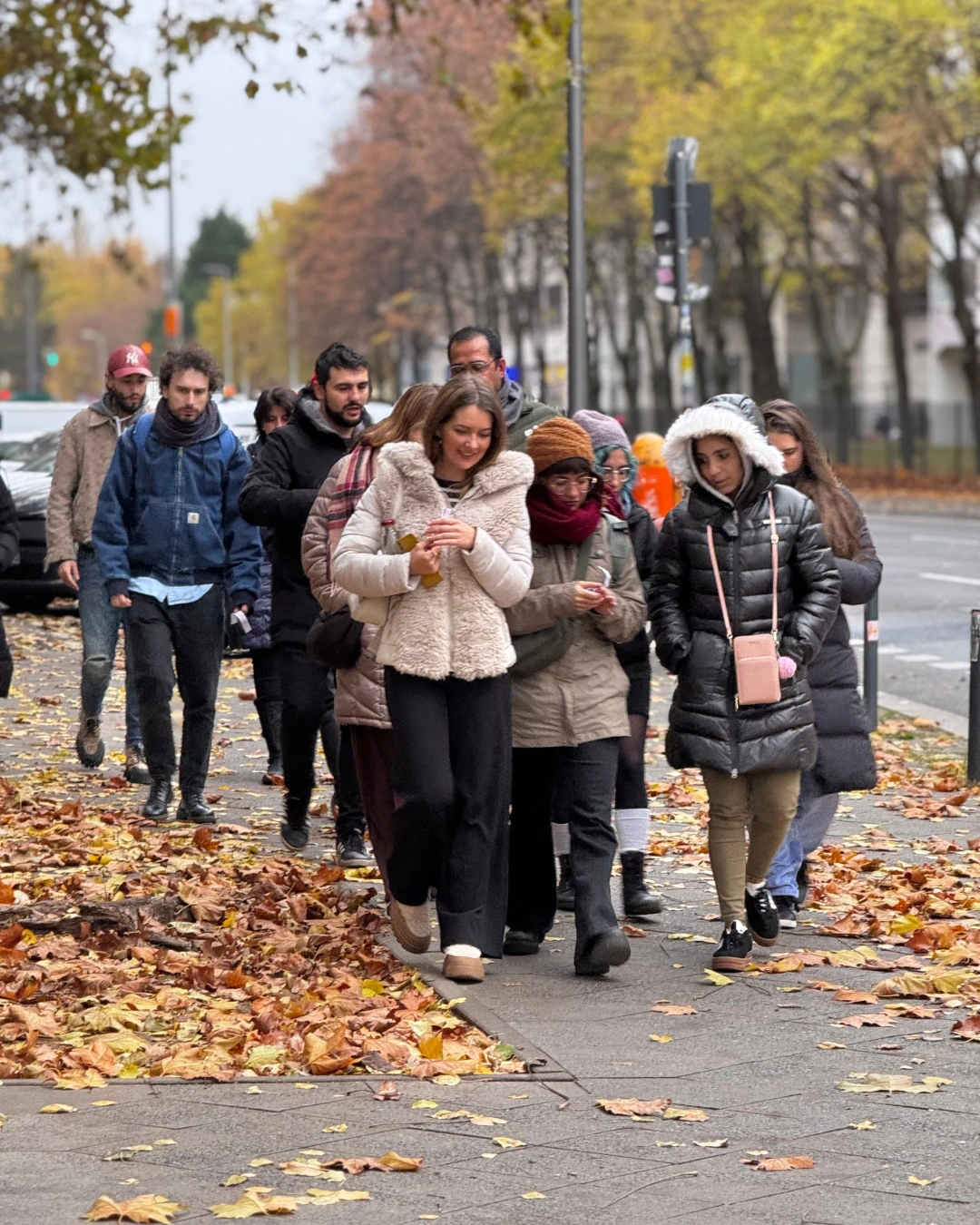

The YouthEUVision Online Academy for Debates was designed to provide young people with a structured yet open space to learn, discuss, and reflect on democracy and European civic life.
While the Academy modules were slightly adapted to the project context, they remain fully aligned with the original online learning framework, ensuring coherence, relevance, and continuity across all partner countries.
By combining online learning modules with moderated debates, the Academy transforms knowledge into practice encouraging young people not only to understand democratic processes, but to actively engage with them.
This module introduces democracy as a living and evolving concept rather than a fixed system. Participants explore democratic values, participation, representation, and human rights, while reflecting on current challenges such as political disengagement, lack of trust in institutions, and the role of citizens in sustaining democratic societies.
The module encourages young people to question how democracy works in practice and what it means in their everyday lives.
Building on the foundations of democracy, this module focuses on how citizens participate. Participants explore political education as a key tool for informed decision-making and analyse voting as both a right and a responsibility.
The module also highlights political activism and civic engagement beyond elections, including advocacy, community action, youth movements, and social participation, empowering young people to see themselves as active political actors.
This module addresses the growing importance of media literacy in democratic societies. Participants examine how information is produced, shared, and consumed, with a focus on misinformation, disinformation, algorithms, and social media influence.
The module strengthens critical thinking skills and encourages responsible digital behaviour, helping young people navigate today’s complex information landscape and make informed democratic choices.
The final module focuses on the European Union, its institutions, values, and policy-making processes. Participants gain a clearer understanding of how EU decisions are made and how they affect daily life at local, national, and European levels.
The module also highlights opportunities for youth participation within the EU and encourages young people to engage with European policies and democratic mechanisms shaping Europe’s future.
Each online debate was directly linked to one of the four modules. Participants completed the learning content in advance and then joined moderated online debates where they could:
exchange perspectives
reflect critically on the topics
connect theory with real-life experiences
engage respectfully with diverse viewpoints
This blended approach ensured meaningful dialogue, shared understanding, and active participation across borders.
Implemented across six European countries, the Online Academy for Debates brought together young people from different social, cultural, and national backgrounds.Despite local adaptations, the common module structure ensured a shared European learning journey, reinforcing democratic values, civic awareness, and youth empowerment.
The Online Academy for Debates is a sustainable educational tool that:
promotes democratic literacy
strengthens youth participation
supports critical and media awareness
encourages informed engagement with the European Union
By adapting the modules to the project context while preserving their core themes, YouthEUVision ensures that democracy is not only taught but experienced, debated, and lived by young people.
Funded by the European Union. Views and opinions expressed are however those of the author(s) only and do not necessarily reflect those of the European Union or the European Education and Culture Executive Agency (EACEA). Neither the European Union nor EACEA can be held responsible for them.
As part of the YouthEUVision – Empowering Youth for a Stronger Europe project, a series of international dissemination conferences were organised across all partner countries. These events marked a key milestone in sharing the project’s results, showcasing its methodologies, and strengthening dialogue on youth democratic participation, active citizenship, and European values.
Held in Germany, Romania, Greece, Spain, Italy, and France, the conferences brought together young people, youth workers, educators, civil society organisations, and institutional stakeholders. Through presentations, interactive discussions, and live demonstrations of the YouthEUVision Online Academy, participants explored how the project’s outcomes can continue to support youth engagement and democratic education beyond the project’s lifetime.


Below the highlights of each International Conference:
CIFAL Málaga hosted a dissemination conference bringing together youth workers, experts, volunteers, and stakeholders to present the key results of the YouthEUVision project. The event highlighted how the project strengthened youth engagement, promoted democratic participation, and fostered inclusion at both local and European levels.
Participants took part in interactive presentations, thematic discussions, and practical activities inspired by YouthEUVision methodologies, including debate-based exercises and group reflections. The conference also created a valuable space for dialogue, where participants discussed political and societal challenges affecting young people in Spain and across Europe.
The final dissemination conference organised by Fundación Sieneva took place in Granada and gathered representatives of local youth organisations and professionals working directly with young people. The event provided a comprehensive overview of the YouthEUVision project, including its objectives, partner countries, and overall impact.
A key focus was placed on presenting all Work Packages, from needs analysis and youth debates to training activities and sustainability measures. Participants also attended a live demonstration of the YouthEUVision Online Academy and engaged in a participatory workshop addressing local barriers to youth democratic participation.
Empower Plus organised final dissemination conferences in Romania aimed at increasing the visibility of YouthEUVision results and reinforcing dialogue on democratic participation. The events brought together youth workers, educators, NGO representatives, and young people from the local community.
Participants were introduced to all project activities, with particular emphasis on the YouthEUVision Online Academy and its learning modules focused on European values, civic engagement, and democracy. Open discussions explored how these resources can be integrated into youth work and non-formal education, supporting long-term sustainability and local impact.
ARCI Solidarietà organised the Italian national dissemination conference as part of WP5, involving youth workers, Online Academy participants, institutional representatives, and project staff. The event opened with a presentation of the project’s context, aims, and methodology, highlighting its relevance for youth participation at national and European levels.
A central moment of the conference was the demonstration of the YouthEUVision Online Academy, followed by the presentation of national results and overall project achievements. Participant feedback and final recommendations were shared, contributing to the visibility and dissemination of project outcomes in Italy.
SALAM hosted the Italian final dissemination conference at its headquarters, bringing together civil society representatives, youth organisations, students, and local institutions. The event presented YouthEUVision as a transnational European initiative implemented across six countries.
Young participants shared their personal experiences, explaining how the project increased their understanding of European institutions and democratic processes. The presence of local authorities, including the mayor, strengthened dialogue between young people and decision-makers and highlighted the importance of youth involvement in shaping a shared European vision.
The Greek final dissemination conference took place in Athens and focused on sharing YouthEUVision results related to democratic participation, active citizenship, and European values. The event gathered young people, youth leaders, educators, NGO representatives, and stakeholders.
Through presentations and open discussions, participants explored key project outcomes with a strong emphasis on democratic education, political literacy, inclusion, and combating misinformation. Feedback showed high participant satisfaction, increased knowledge of EU democratic processes, and stronger motivation for civic engagement.
DIANA organised the YouthEUVision final dissemination conference in France, bringing together young people, youth workers, educators, and civil society representatives. The event focused on presenting the project’s objectives, activities, and results, highlighting the importance of youth participation in democratic life.
Participants were introduced to the YouthEUVision methodology and Online Academy, with discussions centred on their use in non-formal education and youth initiatives in France. Interactive exchanges allowed participants to reflect on challenges to youth engagement and explore ways to strengthen youth voices at local and European levels.
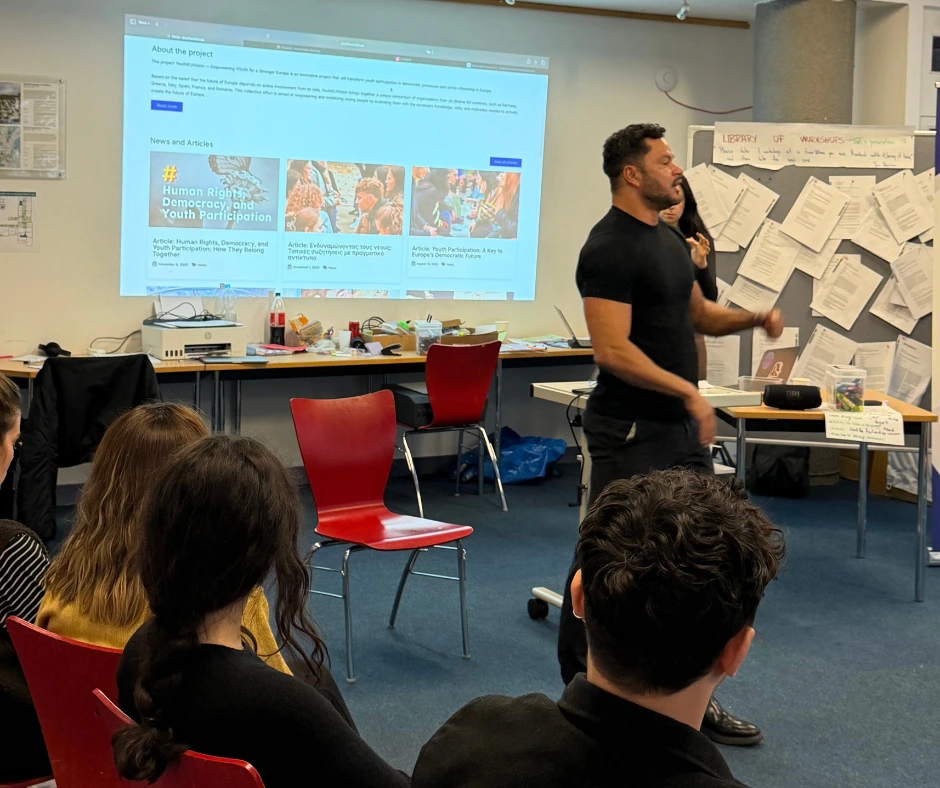
The final dissemination conference in Germany was held in Berlin on Human Rights Day, providing a strong framework for discussions on democracy, human rights, youth participation, and social inclusion. Young people, youth workers, educators, and representatives of local authorities took part in the event.
The conference presented the project’s objectives, methodology, and key outputs, with a strong focus on the YouthEUVision Online Academy as a sustainable educational tool. A dedicated session addressed gender equality in democratic processes, encouraging reflection on inclusive participation and reinforcing young people’s role as active and informed citizens.
Funded by the European Union. Views and opinions expressed are however those of the author(s) only and do not necessarily reflect those of the European Union or the European Education and Culture Executive Agency (EACEA). Neither the European Union nor EACEA can be held responsible for them.
The final conference of the YouthEUVision project brought together 35 participants, including young people, educators, and youth workers, for a three-hour interactive event dedicated to democracy, participation, and human rights. The conference received very positive feedback, reflecting the relevance of the topics and the strong engagement of all participants.
“Youth voices matter. Democracy needs participation.” – Attendee
Held on Human Rights Day, the event placed human rights at the centre of the discussion, exploring their close connection to democracy, youth participation, and active citizenship. Participants reflected on the essential role young people play in protecting democratic values and shaping a more inclusive Europe.
“Human rights and democracy go hand in hand and young people are key to both.”
During the conference, we presented the YouthEUVision project, highlighting its main activities and key outcomes, and creating space for dialogue on the importance of civic engagement and youth involvement in democratic processes.
A key moment was the introduction of the YouthEUVision Online Academy:
👉 https://youtheuvision.eu
The platform offers reports, articles, and learning resources aimed at supporting young people, educators, and youth workers in understanding democracy and promoting meaningful youth engagement across Europe.
“Knowledge empowers participation.” – Attendee
The conference also addressed gender equality and participation, a central focus of the YouthEUVision project. Discussions highlighted ongoing challenges related to gender discrimination and inclusion, underlining the need for gender balance, equality, and solidarity in democratic life.
“There is no real democracy without gender equality.”
The event concluded with a shared reflection on how young people can raise their voices, participate actively, and act as agents of change for a more just and democratic society.
“Change starts with us.”
Funded by the European Union. Views and opinions expressed are however those of the author(s) only and do not necessarily reflect those of the European Union or the European Education and Culture Executive Agency (EACEA). Neither the European Union nor EACEA can be held responsible for them.
YouthEUVision Final Dissemination Conference Successfully Held in Athens.
The Final Dissemination Conference of the YouthEUVision project was successfully held in Athens, implemented by the Municipality of Egaleo, bringing together 33 young people, along with students, educators, youth workers, and key stakeholders.
The conference aimed to present the project’s vision, objectives, methodology, activities, and key outcomes, while creating a meaningful space for dialogue on youth participation, democracy, critical thinking, media literacy, and active citizenship.
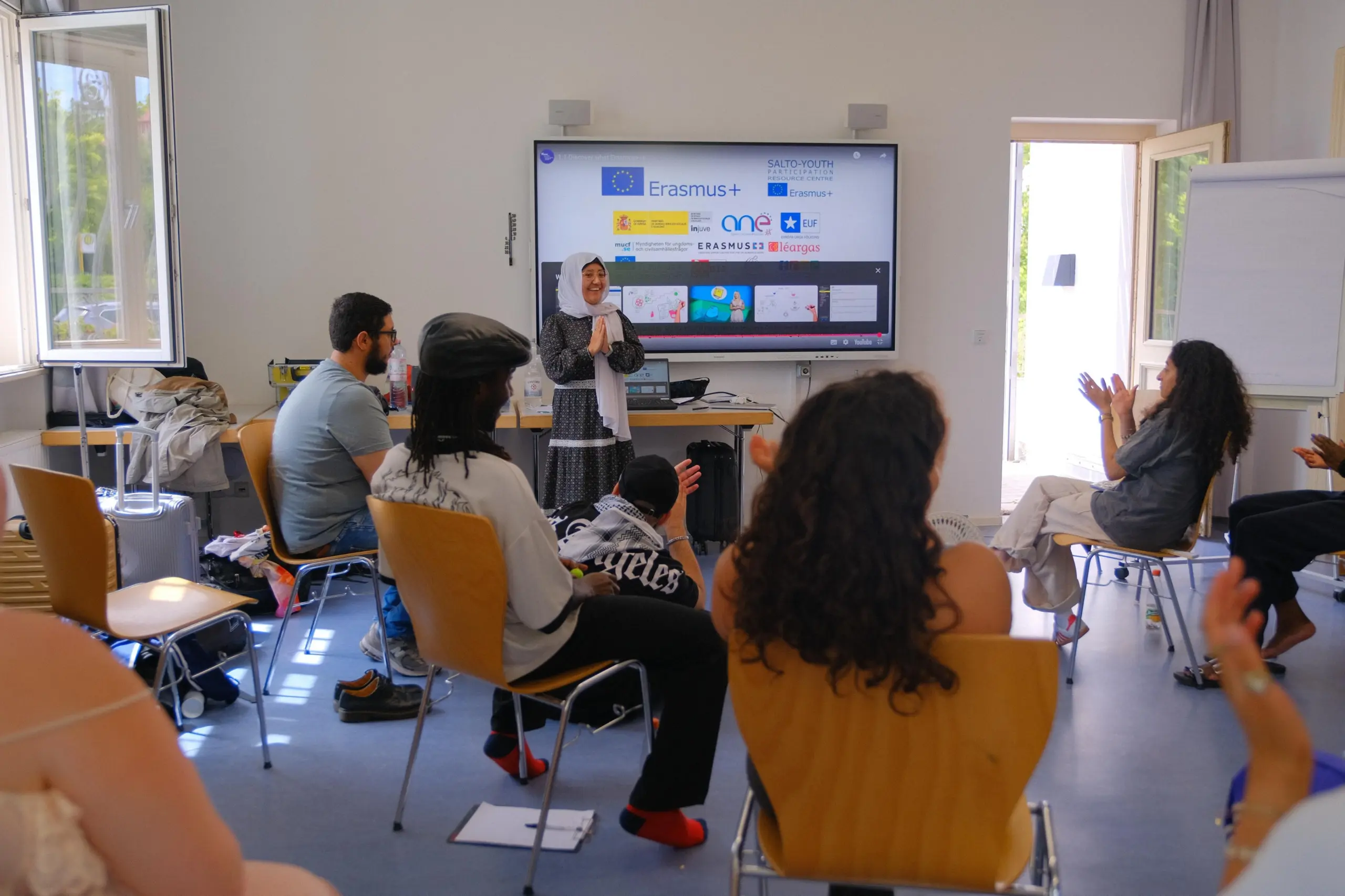
Over the course of the three-hour event, participants were introduced to the YouthEUVision Online Academy, its educational modules, and the national implementation results in Greece, highlighting good practices and lessons learned.
Emphasis was placed on the importance of informed, conscious, and active youth participation in democratic processes. Discussions explored how young people can engage beyond voting, through dialogue, critical reflection, community involvement, and resistance to misinformation and greenwashing.
Through presentations and open discussions, participants exchanged perspectives on current social and political challenges, while reflecting on ways to strengthen democratic engagement at both local and European levels.
The conference also included a dedicated feedback session, enabling participants to share their experiences, insights, and recommendations for future initiatives. The interactive format and welcoming atmosphere fostered active involvement, encouraging meaningful exchanges and collaborative reflection among attendees.
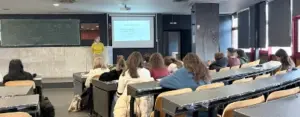
Overall, the Final Dissemination Conference reaffirmed the relevance and impact of the YouthEUVision project in empowering young people, enhancing political and civic education, and promoting core democratic values. The Municipality of Egaleo reaffirmed its strong commitment to supporting initiatives that strengthen youth engagement, critical thinking, and active citizenship, contributing to a more inclusive and participatory democratic future.
Funded by the European Union. Views and opinions expressed are however those of the author(s) only and do not necessarily reflect those of the European Union or the European Education and Culture Executive Agency (EACEA). Neither the European Union nor EACEA can be held responsible for them.
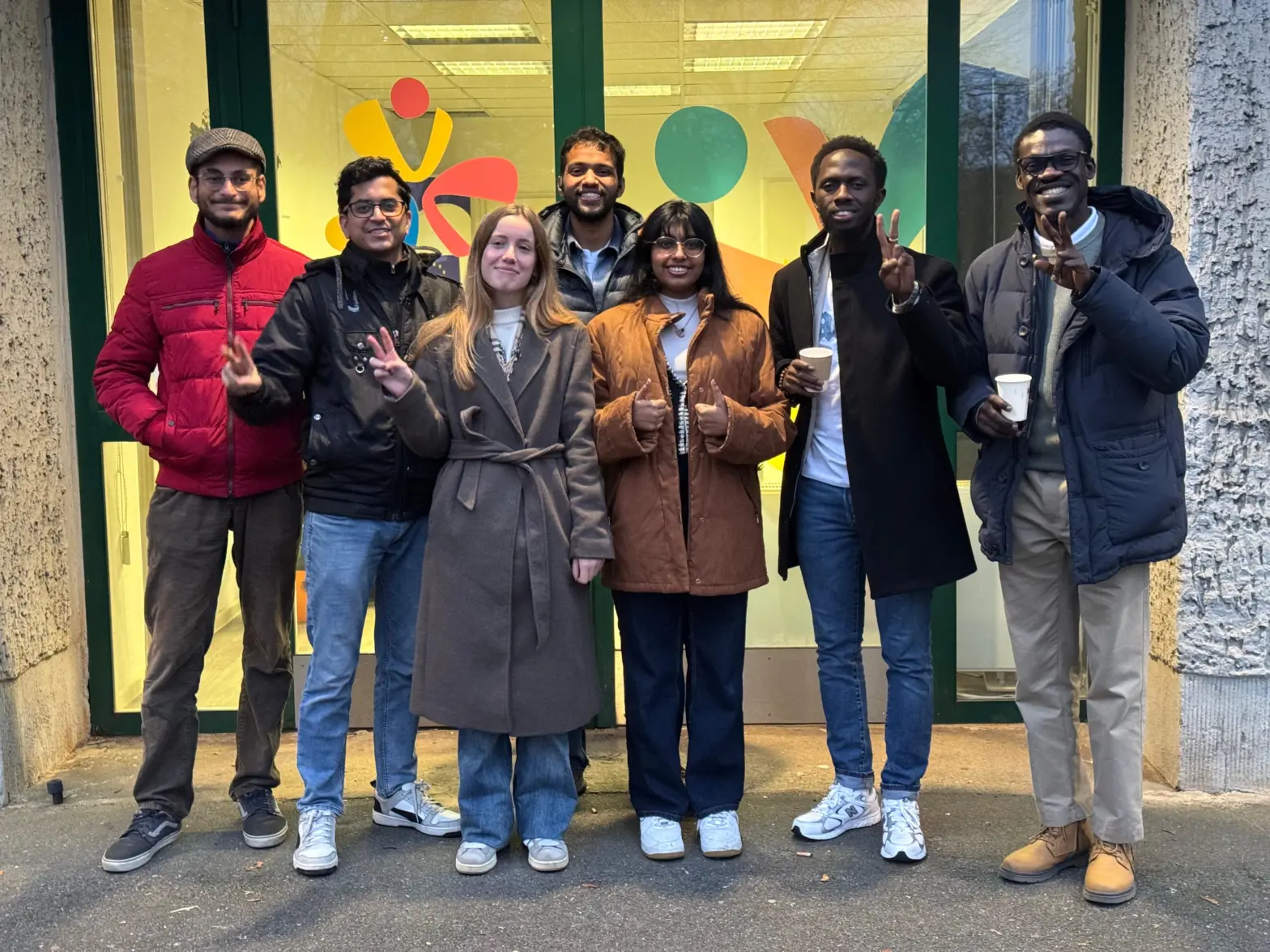
Across Europe, young people often express a strong desire to be heard, yet feel distant from decision-making processes that shape their lives. Within the framework of YouthEUVision – Empowering YOUth for a Stronger Europe, Work Package 3 (WP3) set out to address this gap by creating inclusive, face-to-face spaces where young people could speak, listen, and engage in meaningful dialogue.
Between the six partner countries—Germany, France, Greece, Spain, Italy, and Romania—a total of 36 in-situ Physical Debates were organised, with six debates held in each country. Altogether, 343 young people took part in the WP3 activities, exceeding the minimum target of 276 participants defined in the Grant Agreement. This strong level of participation reflects both the relevance of the topics addressed and the effectiveness of the outreach strategies adopted by the partners.
The debates brought together young people from diverse social, cultural, and economic backgrounds, with a particular focus on the inclusion of youth with fewer opportunities, including participants from low-income families, migrant communities, rural areas, and educational or social support pathways.
Each country implemented a structured cycle of six debates, addressing themes that resonate strongly with young people’s everyday realities:
Community Engagement and Civic Participation
Youth Employment and Economic Opportunities
Education Reform and Youth Empowerment
Health and Well-being of Youth
Environmental Sustainability in Our Region
Cultural Heritage, Identity, and Diversity
This common framework ensured coherence across the project, while allowing local contexts, personal experiences, and national realities to shape the discussions.
A key insight emerging across countries was the distance many young people feel from traditional political and institutional structures. Participation was often described as symbolic or ineffective when not followed by visible outcomes. At the same time, the debates revealed a strong willingness to engage when young people feel respected, informed, and genuinely included.
Through participatory formats such as Fishbowl debates, moderated discussions, and non-formal learning methods, participants developed skills in critical thinking, argumentation, and active listening. These formats created safe environments where disagreement could exist without conflict, and where dialogue replaced passivity.
For many participants, particularly those from disadvantaged backgrounds, the Physical Debates marked the first time they were invited to openly share their opinions on issues such as democracy, education, employment, mental health, environmental responsibility, and identity.
Young people spoke candidly about precarious work, educational pressures, lack of access to information, and climate anxiety. By valuing these lived experiences, the debates reinforced a powerful message: youth perspectives are not peripheral but central to discussions about the future of Europe.
Inclusivity was not an add-on, but a defining feature of WP3. In every country, at least half of the participants were young people with fewer opportunities. Through targeted outreach and close collaboration with schools, youth organisations, and local actors, the debates reached young people who are often excluded from civic spaces.
Facilitators observed increased confidence and participation among young people who typically remain silent in formal educational or institutional settings, highlighting the effectiveness of non-formal and peer-based approaches.
Beyond the debates themselves, WP3 succeeded in fostering youth mini-communities that extended beyond the project timeline. The Physical Debates functioned as social spaces for connection, peer learning, and mutual support.
A tangible example of this legacy is the creation of BrunchHubTalks, a youth-led club that emerged directly from the debates. BrunchHubTalks continues to operate as an informal platform where young people meet regularly to discuss social and civic topics, demonstrating the sustainability of the relationships and motivation generated through WP3.
Overall, the WP3 Physical Debates had a strong and positive impact on the 343 participants involved across Europe. Participants reported increased confidence in expressing their views, improved communication and dialogue skills, greater awareness of civic opportunities, and a stronger sense of belonging and empowerment.
By providing inclusive, well-facilitated, and meaningful spaces for dialogue, WP3 demonstrated that young people are eager to engage when given the opportunity. The Physical Debates stand as a powerful example of how face-to-face participation can strengthen democratic engagement, social cohesion, and youth empowerment across diverse European contexts.
Funded by the European Union. Views and opinions expressed are however those of the author(s) only and do not necessarily reflect those of the European Union or the European Education and Culture Executive Agency (EACEA). Neither the European Union nor EACEA can be held responsible for them.
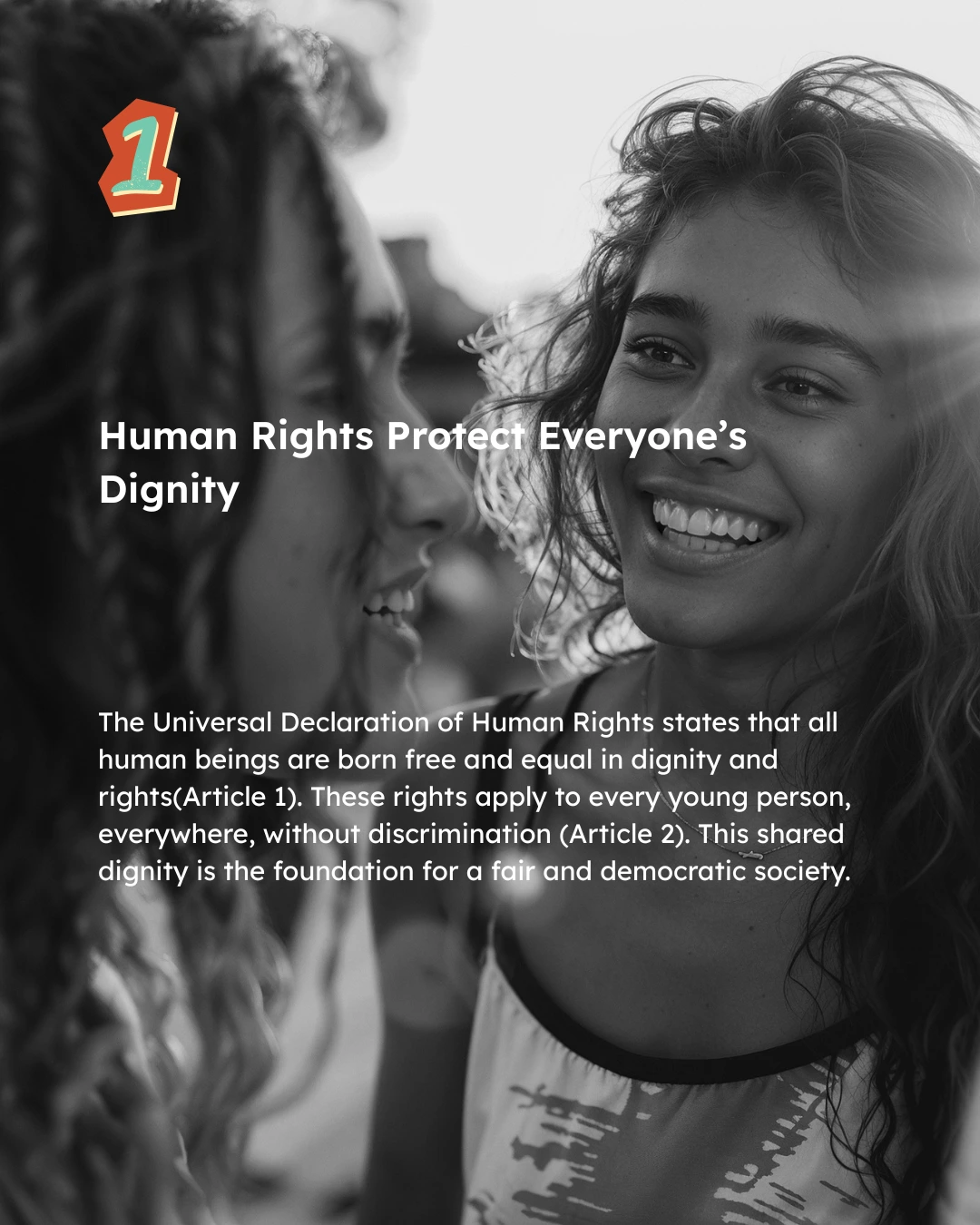
Human rights are basic freedoms and protections that every person has from birth.
The Universal Declaration of Human Rights (UDHR) states that:
All human beings are born free and equal in dignity and rights (Article 1).
These rights apply to everyone, with no exceptions or discrimination (Article 2).
This means that no matter your background, identity, or beliefs, you have the same right to be safe, respected, and heard. Human rights create the foundation for a society where people can live freely and develop their potential.
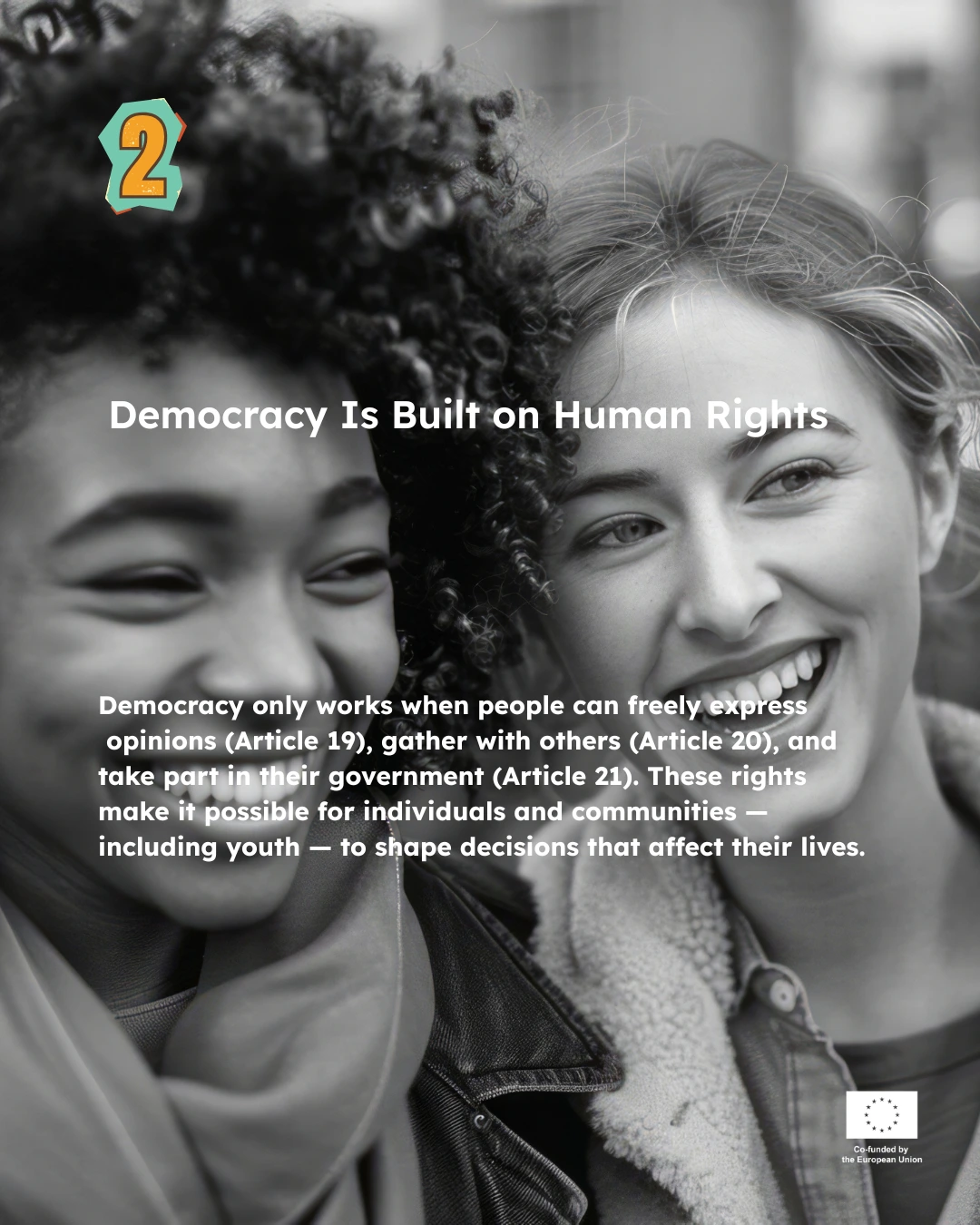
Democracy is much more than voting once every few years. A healthy democracy depends on the rights protected in the UDHR.
For example:
Freedom of opinion and expression (Article 19) allows people to speak up, debate ideas, and share their perspectives.
Freedom of peaceful assembly and association (Article 20) allows people to join groups, movements, or protests.
The right to take part in government and public affairs (Article 21) ensures that the will of the people guides political decisions.
Without these rights, democracy cannot function. Human rights give democracy its meaning: they ensure that participation is open, fair, and inclusive. They protect minorities, ensure equal treatment, and prevent abuses of power.
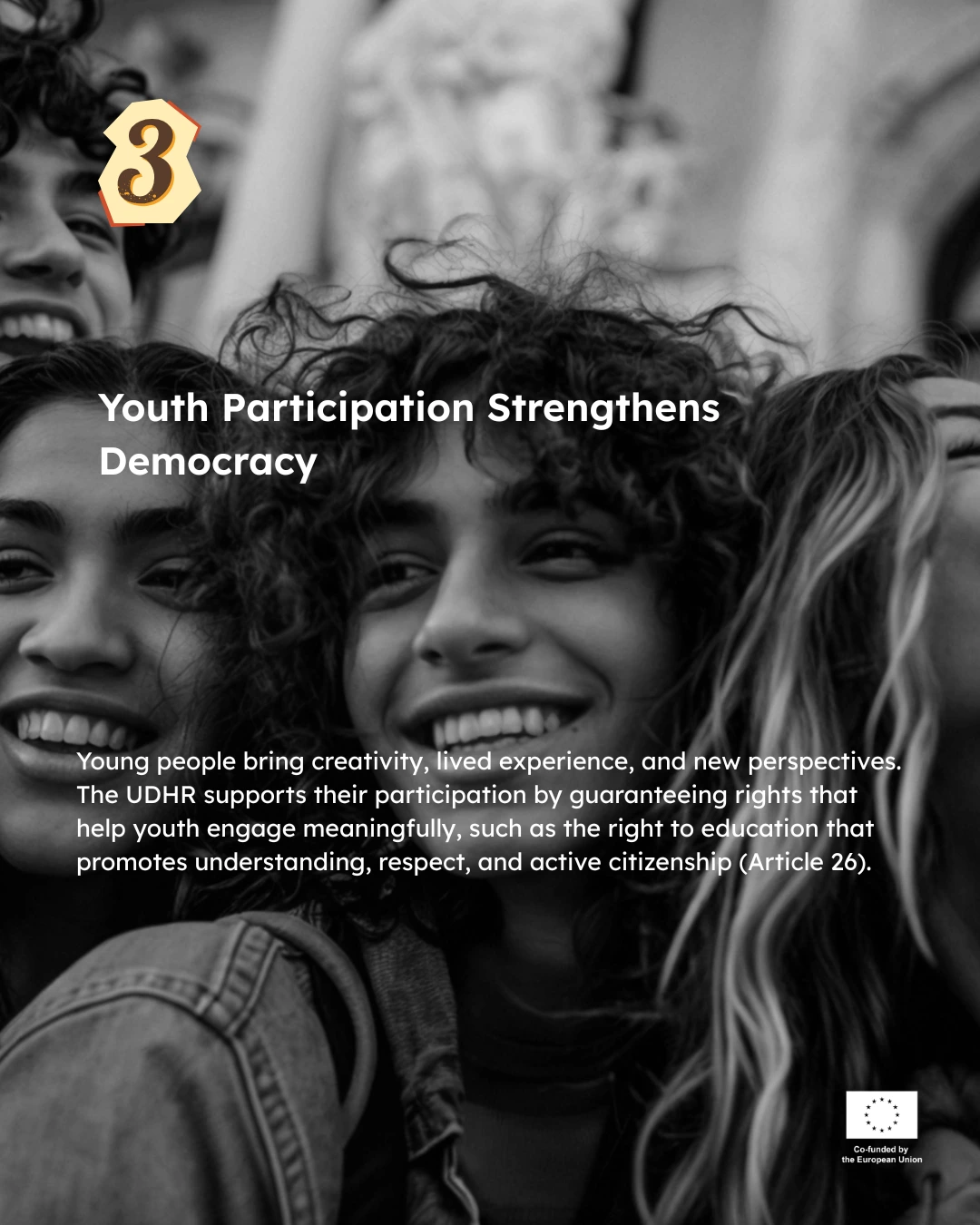
Young people are not just “future citizens” they are citizens now. They experience social, economic, and political issues directly and have innovative ideas for addressing them. The UDHR reinforces youth participation by guaranteeing rights such as:
Education that promotes understanding, tolerance, and respect (Article 26).
Freedom to express ideas and seek information (Article 19).
The right to participate in cultural and community life (Article 27).
Even though the UDHR does not mention youth explicitly, its principles clearly support the idea that young people must have space to participate in shaping society.
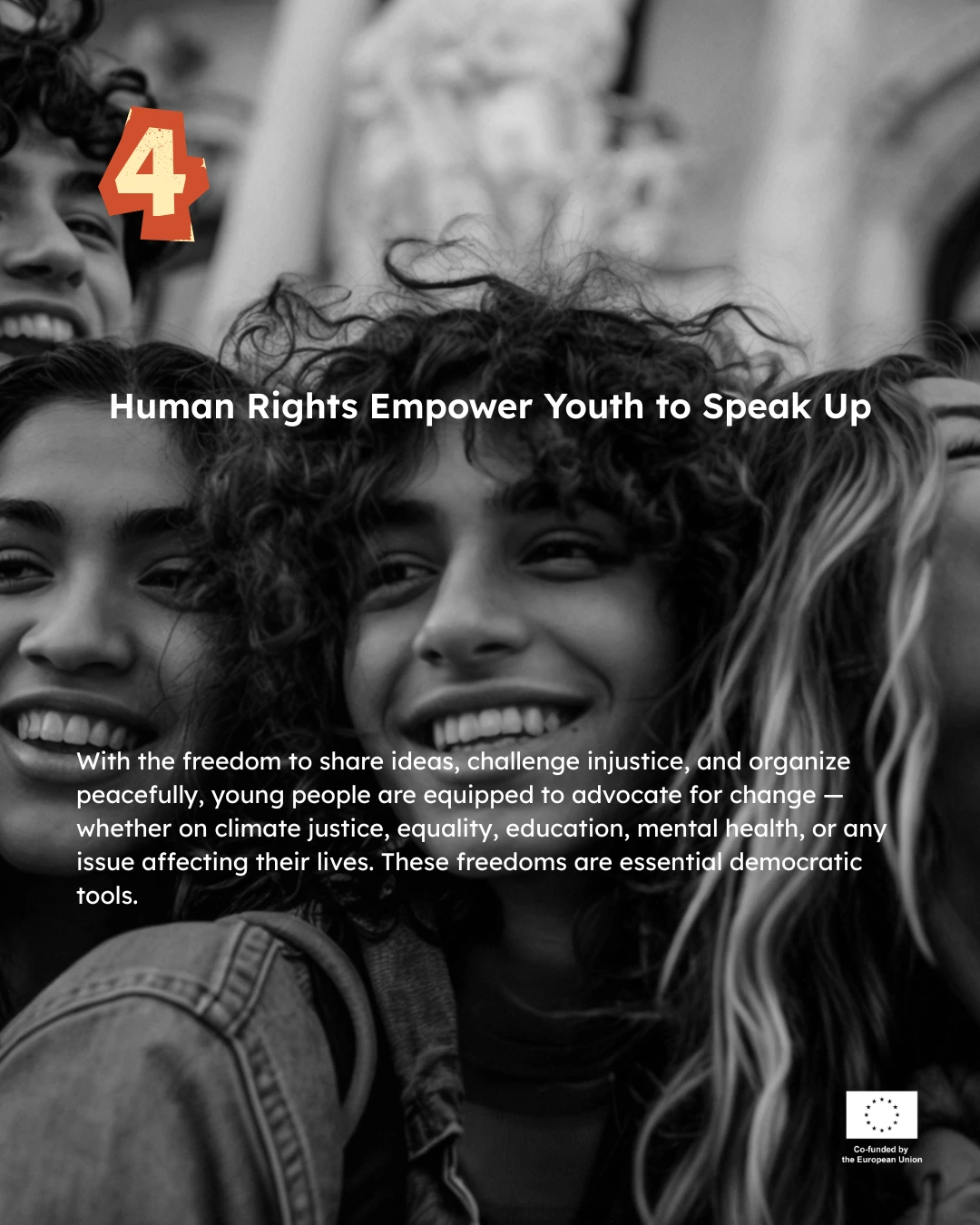
When young people know their rights, they can:
Challenge discrimination and inequality.
Participate in youth councils, school parliaments, or local decision-making.
Express their political opinions online or offline.
Advocate for issues like climate justice, LGBTQ+ rights, migration, education, or mental health.
Hold governments and institutions accountable.
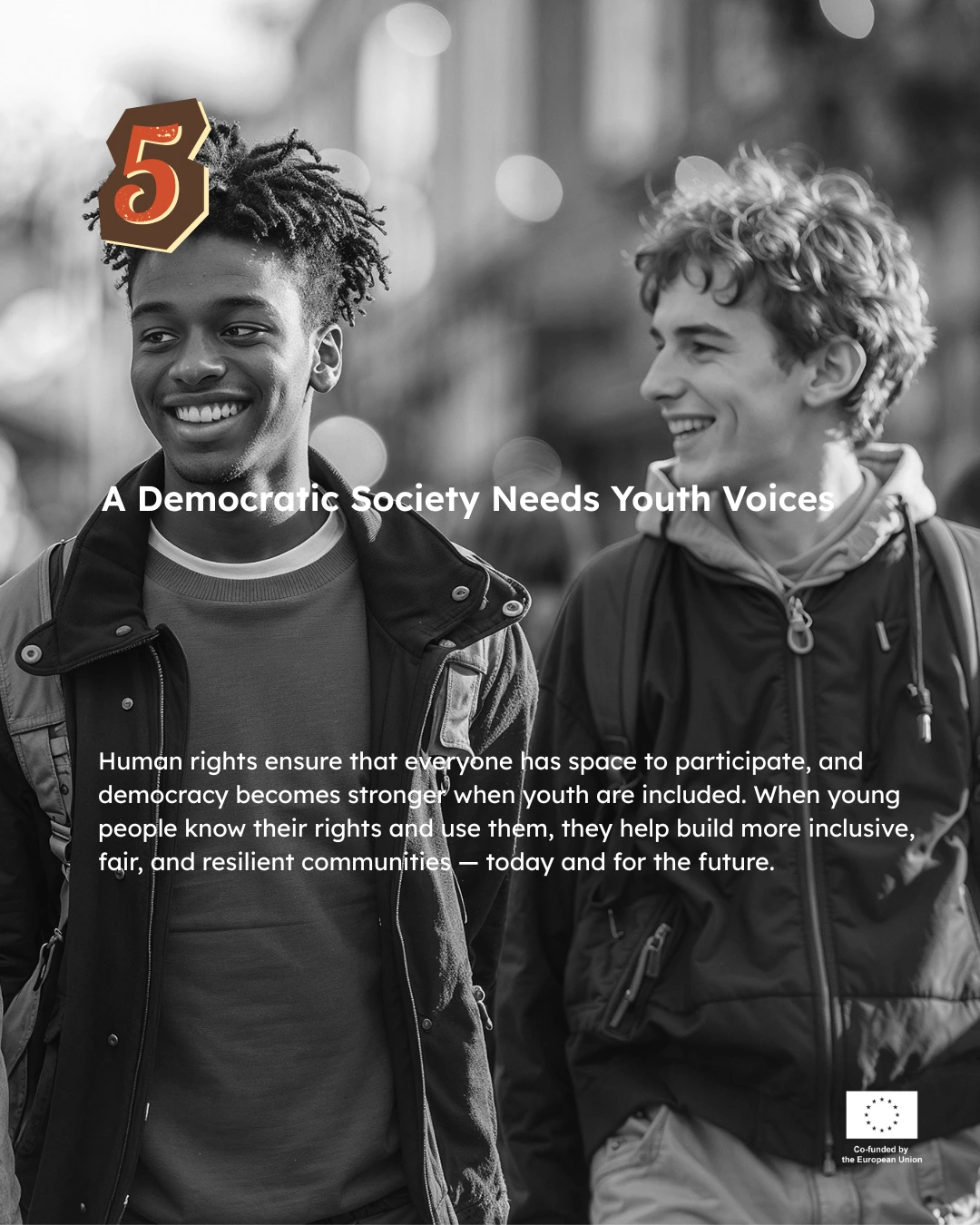
Democracy becomes stronger when youth are not only allowed but encouraged to take part. This is exactly the spirit of the rights to expression, assembly, and participation protected in the UDHR.
Around the world, many young people feel unheard or disconnected from politics. The UDHR reminds us that participation is not optional, it’s a right. Democracy needs the energy, creativity, and perspectives of youth to solve today’s challenges and build a fairer, more inclusive society.
The Universal Declaration of Human Rights provides the basis for freedom, equality, and dignity for all. Democracy turns these principles into everyday practice. And youth participation ensures that societies evolve, stay dynamic, and reflect the needs of everyone. When young people know their rights and use their voices, they keep democracy alive.
Funded by the European Union. Views and opinions expressed are however those of the author(s) only and do not necessarily reflect those of the European Union or the European Education and Culture Executive Agency (EACEA). Neither the European Union nor EACEA can be held responsible for them.
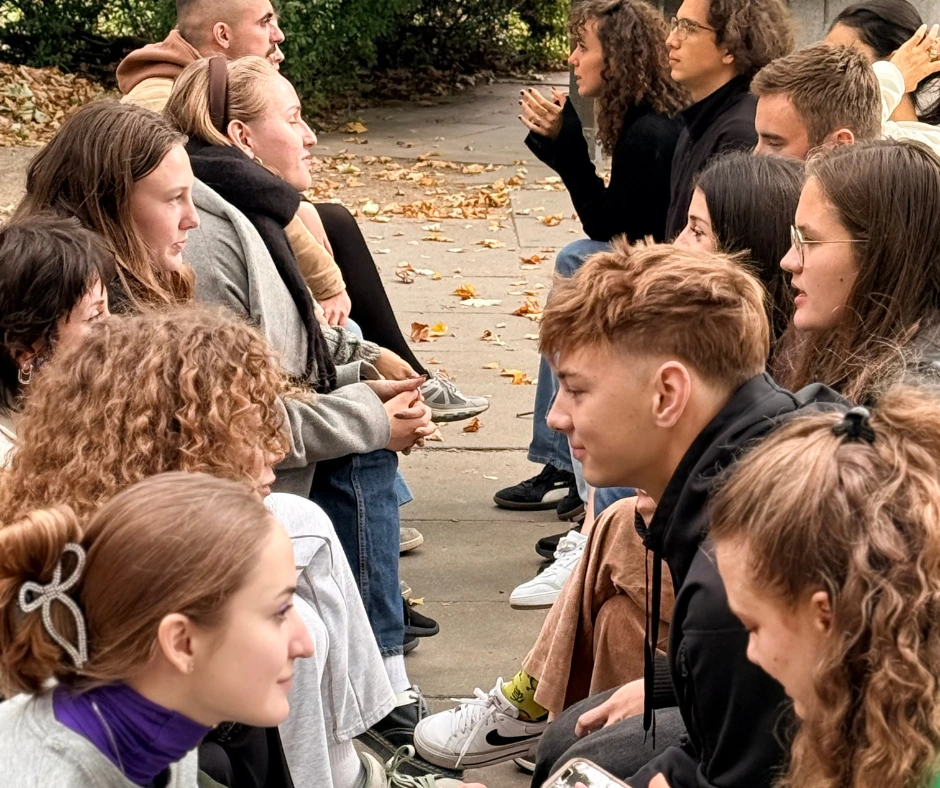
Στο πλαίσιο του ευρωπαϊκού έργου YouthEUVision – Empowering YOUth for a Stronger Europe, ο Δήμος Αιγάλεω υλοποίησε έναν κύκλο βιωματικών εργαστηρίων και συζητήσεων νέων, δίνοντας στους νέους της πόλης βήμα να εκφράσουν τις απόψεις τους και να διαμορφώσουν προτάσεις για το μέλλον τους.
Στις 25–30 Μαΐου 2025, νέοι και νέες συναντήθηκαν διά ζώσης για να συζητήσουν σημαντικά ζητήματα που τους αφορούν, να αναπτύξουν επιχειρήματα, και να ψηφίσουν για τις αλλαγές που θεωρούν απαραίτητες στην τοπική κοινωνία.
Τι πραγματοποιήθηκε: Έξι τοπικές συζητήσεις νέων
Κάθε συζήτηση διήρκησε 45 λεπτά και περιελάμβανε εισαγωγή, αρχικές τοποθετήσεις από τις δύο πλευρές, διάλογο και αντιπαράθεση επιχειρημάτων, ερωτήσεις από το κοινό και τελική ψηφοφορία. Οι θεματικές επιλέχθηκαν με βάση τις πραγματικές ανάγκες και εμπειρίες των νέων της πόλης.
Η πρώτη συζήτηση αφορούσε τη Συμμετοχή στην Κοινότητα, όπου οι νέοι πρότειναν τη δημιουργία δημοτικού συμβουλίου νέων και ψηφιακής πλατφόρμας συμμετοχής.
Η δεύτερη συζήτηση είχε θέμα την Εργασία και τις Ευκαιρίες για Νέους και ανέδειξε την ανάγκη για ενίσχυση της νεανικής επιχειρηματικότητας και συνεργασίες μεταξύ σχολείων και τοπικών φορέων ώστε να υπάρχουν περισσότερες πρακτικές ευκαιρίες.
Η τρίτη συζήτηση επικεντρώθηκε στο Σχολείο και την Εκπαιδευτική Στήριξη, υπογραμμίζοντας την αξία της εκπαίδευσης σε δεξιότητες ζωής και της ψυχολογικής υποστήριξης μέσα στο σχολικό περιβάλλον.
Στην τέταρτη θεματική, Ψυχική και Σωματική Υγεία, οι νέοι έδωσαν έμφαση στην πρόληψη μέσω εκπαίδευσης, στη δωρεάν πρόσβαση σε δράσεις ευεξίας και στην ανάγκη ύπαρξης ψυχολόγων σε κάθε σχολείο.
Η πέμπτη συζήτηση αφορούσε το Περιβάλλον και τη Βιώσιμη Ανάπτυξη, με προτάσεις για πράσινη κινητικότητα, δράσεις ανακύκλωσης και δενδροφυτεύσεις από μαθητικές και νεανικές ομάδες.
Τέλος, η έκτη συζήτηση είχε ως επίκεντρο τον Πολιτισμό, την Ταυτότητα και τη Συμπερίληψη, και οι προτάσεις αφορούσαν νεανικά φεστιβάλ πολιτισμού, προγράμματα ανάδειξης της τοπικής κληρονομιάς και δημιουργία περιεχομένου από τους ίδιους τους νέους.
Τα αποτελέσματα των συζητήσεων από τους 36 συνολικά συμμετέχοντες, τροφοδοτούν τα παραδοτέα του έργου, ενισχύοντας την παρουσία της φωνής των νέων του Αιγάλεω στο ευρύτερο ευρωπαϊκό γίγνεσθαι.
Γιατί είναι σημαντικό;
Οι νέοι και οι νέες απέδειξαν ότι:
έχουν άποψη και θέλουν να ακουστούν
μπορούν να προτείνουν ρεαλιστικές λύσεις
επιθυμούν ενεργό ρόλο στη λήψη αποφάσεων
Ο Δήμος Αιγάλεω δεσμεύεται να συνεχίσει την υποστήριξη των νέων, μετατρέποντας τις προτάσεις αυτές σε ουσιαστικές παρεμβάσεις με συνέπεια και συνέχεια.
Για περισσότερες πληροφορίες επισκεφτείτε την ιστοσελίδα του Προγράμματος στο https://youtheuvision.eu/
Funded by the European Union. Views and opinions expressed are however those of the author(s) only and do not necessarily reflect those of the European Union or the European Education and Culture Executive Agency (EACEA). Neither the European Union nor EACEA can be held responsible for them.
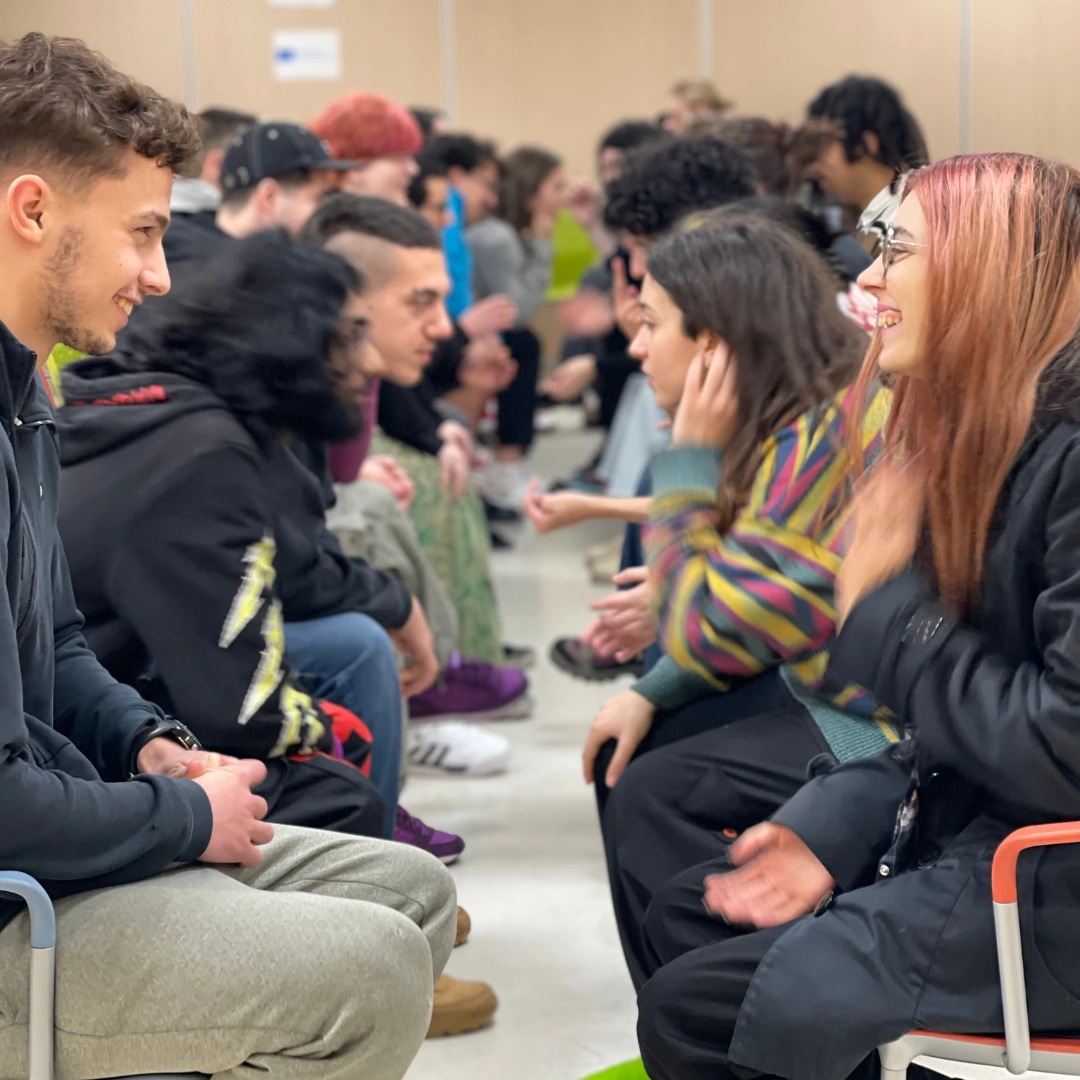
Across Europe, democracy stands at a crossroads and the next generation holds the key to its renewal. As recent elections reveal, young people remain both deeply invested in shaping their societies and increasingly disillusioned with traditional politics. While their activism thrives on digital platforms and issue-based movements, their participation in formal democratic processes continues to lag behind. Understanding this paradox is vital: Europe’s democratic resilience depends not only on policies made for youth but on those made with them.
Young people remain indispensable to the health of European democracy, yet their political engagement remains disappointingly uneven. Although overall voter turnout climbed to 50.6% in the 2019 European Parliament elections a significant rebound youth turnout still trails behind the general average. Early data from the 2024 elections point to a troubling 6% drop in participation among under-30s.
Europe’s youth, however, are anything but passive. Across the EU, nearly 40% of young people have signed petitions, one in five volunteers, and many rely on Instagram and TikTok as crucial sources of political information. This shift toward digital and issue-based activism, especially on climate justice and equality, reflects both their frustration with formal institutions and their unwavering commitment to change.
In its 2022 Think Tank briefing, the European Parliament underscored this sentiment, noting that “today’s political decisions have a strong impact on the future of young people. It is therefore crucial to foster their active participation in social and democratic life.”
The YouthEUVision consortium has confirmed these trends through rigorous desktop research across six countries: Germany, Greece, Italy, Spain, France, and Romania. Our findings reveal a shared pattern: while young people across these nations are eager to participate, they encounter similar barriers, limited civic education, poor access to clear and reliable EU-related information, and the perception that established political systems don’t hear or value their voices.
These obstacles aren’t just inconvenient they are dangerous for democratic legitimacy. Without meaningful engagement, apathy can morph into disenchantment or alienation. That’s why initiatives like YouthEUVision are essential. Through a combination of research, debates, workshops, and online modules, we aim to transform young Europeans from passive observers into active shapers of policy and democratic practice.
Investing in youth participation is not just a moral imperative it’s strategic resilience. By empowering young citizens through knowledge, platforms, and confidence, Europe can convert today’s disengagement into tomorrow’s leadership.
Conclusion
Europe’s democratic vitality depends on the inclusion of its youngest citizens—not merely as voters but as co-authors of its collective future. The data reveal a troubling paradox: while many young Europeans are active in civic and digital spaces, too few feel empowered within formal politics. This disconnection signals not indifference, but a demand for renewal—a call for institutions that listen, adapt, and evolve.
Initiatives like YouthEUVision demonstrate that when young people are given the tools, knowledge, and trust to participate meaningfully, they respond with creativity and conviction. Investing in their participation is therefore not a symbolic gesture—it is a strategic investment in Europe’s resilience, social cohesion, and democratic continuity. If Europe wants to remain a project of hope, it must ensure that its future is written with the voices of its youth at the heart of every decision.
Resources:
Desktop research YouthEUVision
AP News+1European Youth Portal+3Epthinktank+3European Parliament+3
Funded by the European Union. Views and opinions expressed are however those of the author(s) only and do not necessarily reflect those of the European Union or the European Education and Culture Executive Agency (EACEA). Neither the European Union nor EACEA can be held responsible for them.
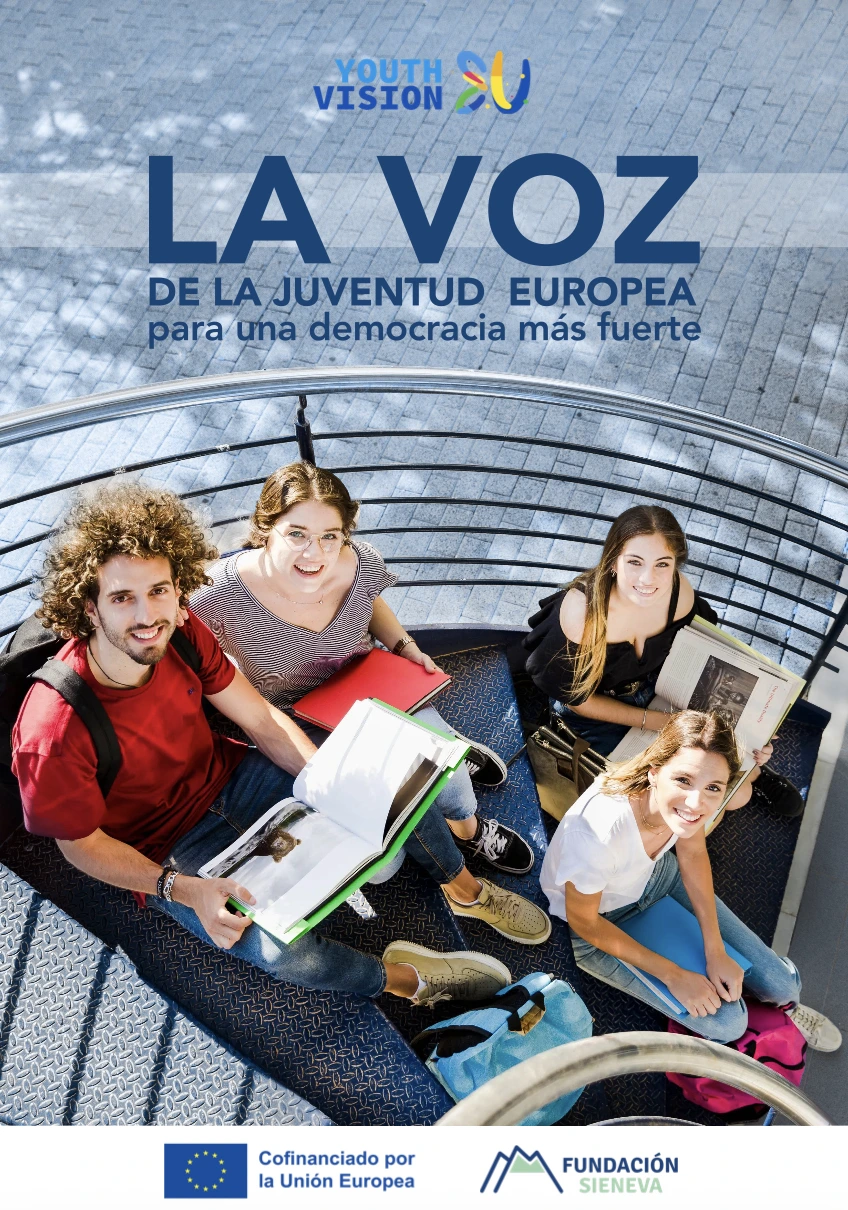
Fundación Sieneva, junto a organizaciones de Alemania, Grecia, Italia, Francia, España y Rumanía, forma parte de YouthEUVision – Empowering YOUth for a Stronger Europe, un proyecto europeo innovador que busca situar a la juventud en el centro del futuro democrático del continente.
En un contexto marcado por la desafección política, las desigualdades sociales y la necesidad urgente de fortalecer la cohesión europea, YouthEUVision nace con una premisa clara: la democracia europea solo será sólida si se construye junto a sus jóvenes.
YouthEUVision empodera a 1.280 jóvenes de entre 18 y 30 años mediante debates, campañas educativas, formación, encuentros internacionales y una Academia Digital Europea de Debate. El objetivo es dotarles de competencias en pensamiento crítico, liderazgo, comunicación y participación ciudadana.
El proyecto parte de una realidad contundente:
Solo 1 de cada 3 jóvenes europeos se siente bien informado sobre la Unión Europea.
El 56 % afirma que le gustaría participar más en las decisiones políticas, pero no sabe cómo.
Persisten desigualdades de género, barreras socioeconómicas y falta de espacios accesibles de participación.
Ante este escenario, YouthEUVision ofrece herramientas reales para que la juventud opine, proponga y lidere.
El proyecto se alinea con las prioridades de la Comisión Europea y con demandas claras de la juventud:
La participación de jóvenes en las elecciones europeas aumentó un 14 % en los últimos comicios, pero sigue siendo insuficiente.
Los Eurobarómetros muestran que sus principales preocupaciones son el cambio climático, el empleo, la igualdady los derechos humanos.
Europa necesita nuevas generaciones capaces de dialogar, debatir y construir soluciones colectivas ante los desafíos actuales.
La juventud europea no solo quiere opinar: quiere ser escuchada. YouthEUVision crea el espacio para que eso sea posible.
Durante 19 meses, el proyecto desarrolla acciones clave:
Un diagnóstico europeo sobre la situación de la participación juvenil.
Un programa formativo para formadores en Alemania.
Talleres locales en los seis países participantes.
Debates nacionales y transnacionales.
Una plataforma digital abierta con cursos, vídeos, simulaciones y herramientas participativas.
Conferencias finales para presentar recomendaciones a instituciones y responsables políticos.
Cada acción comparte un mismo propósito: que miles de jóvenes descubran que sus ideas importan y que su participación transforma Europa.
Funded by the European Union. Views and opinions expressed are however those of the author(s) only and do not necessarily reflect those of the European Union or the European Education and Culture Executive Agency (EACEA). Neither the European Union nor EACEA can be held responsible for them.
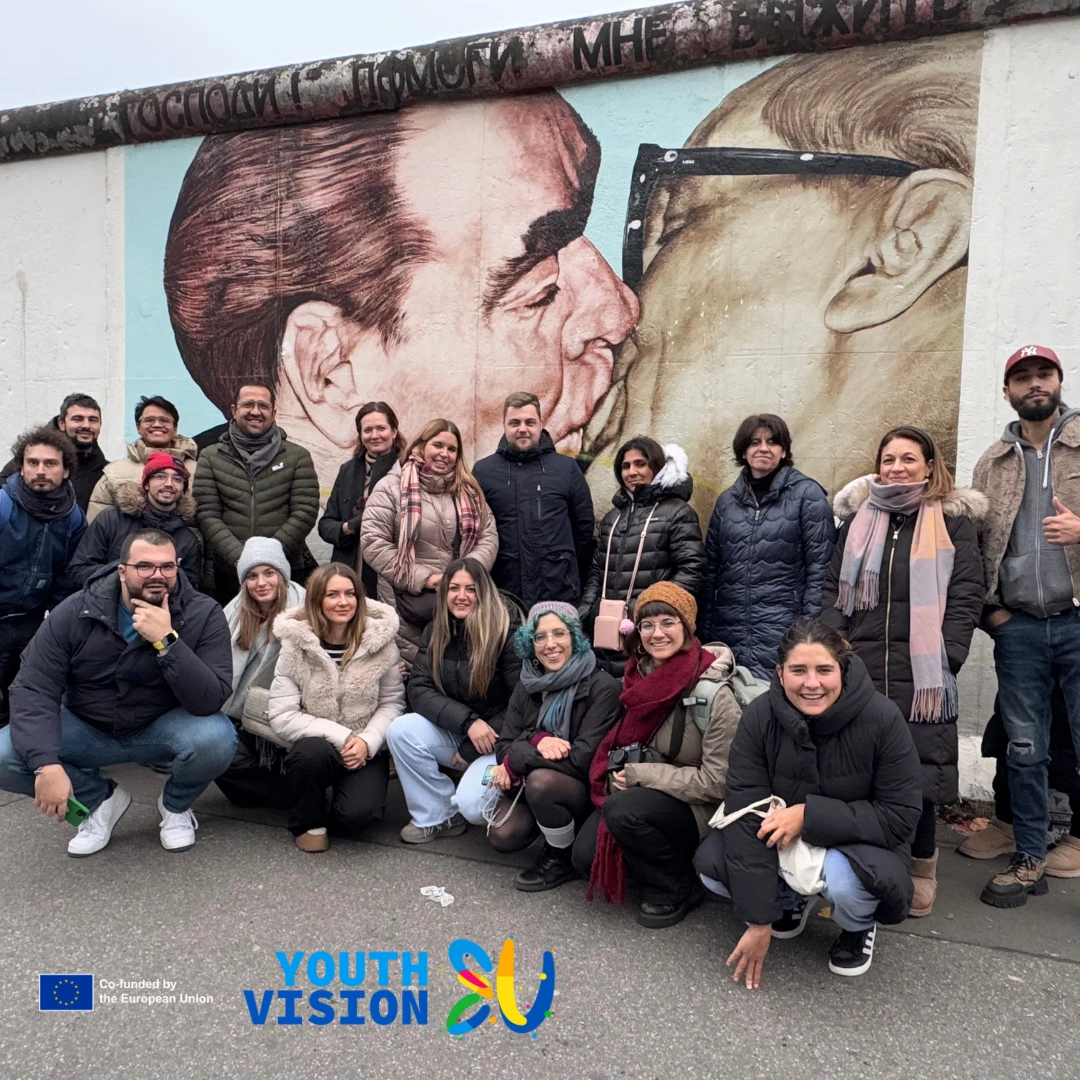
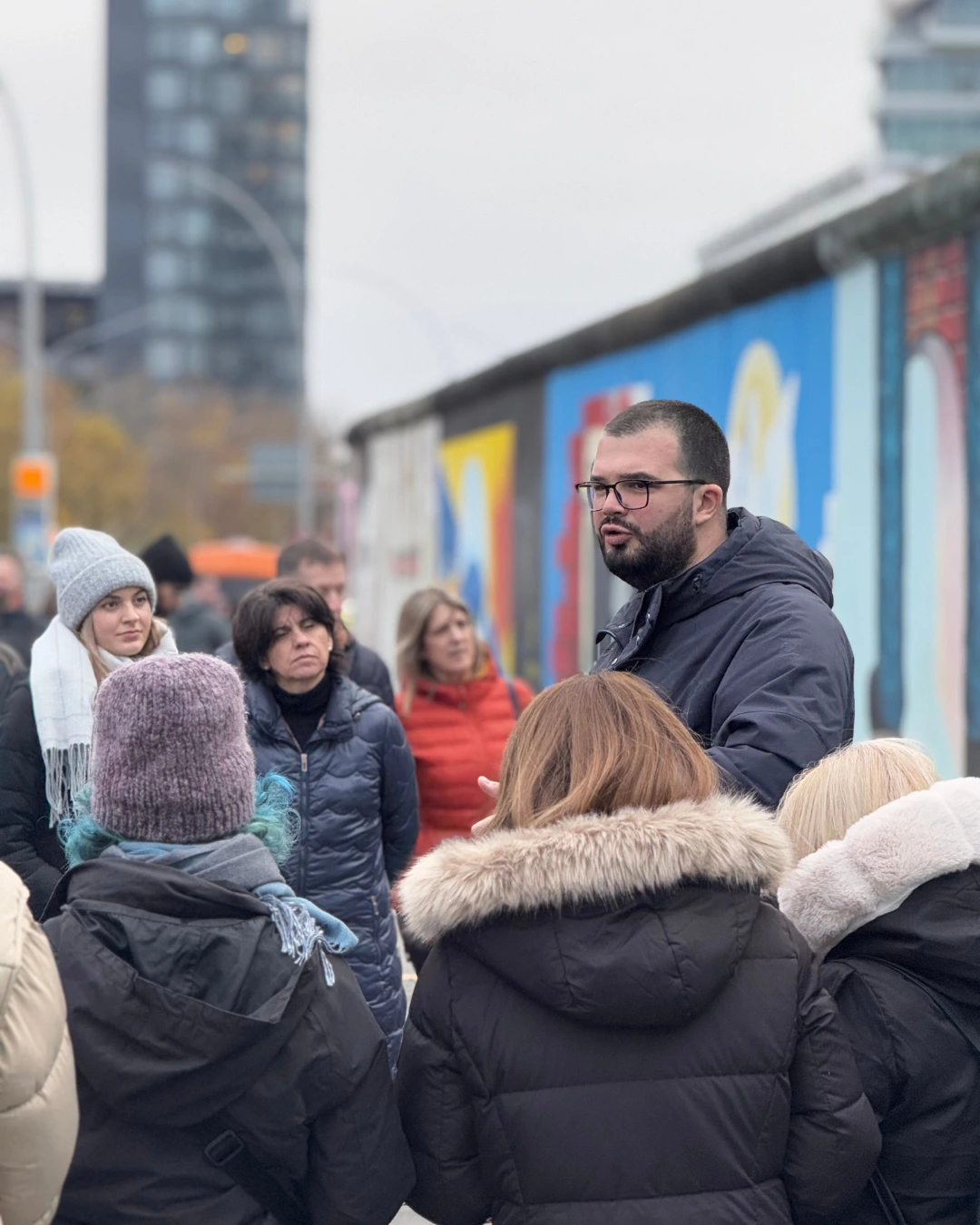
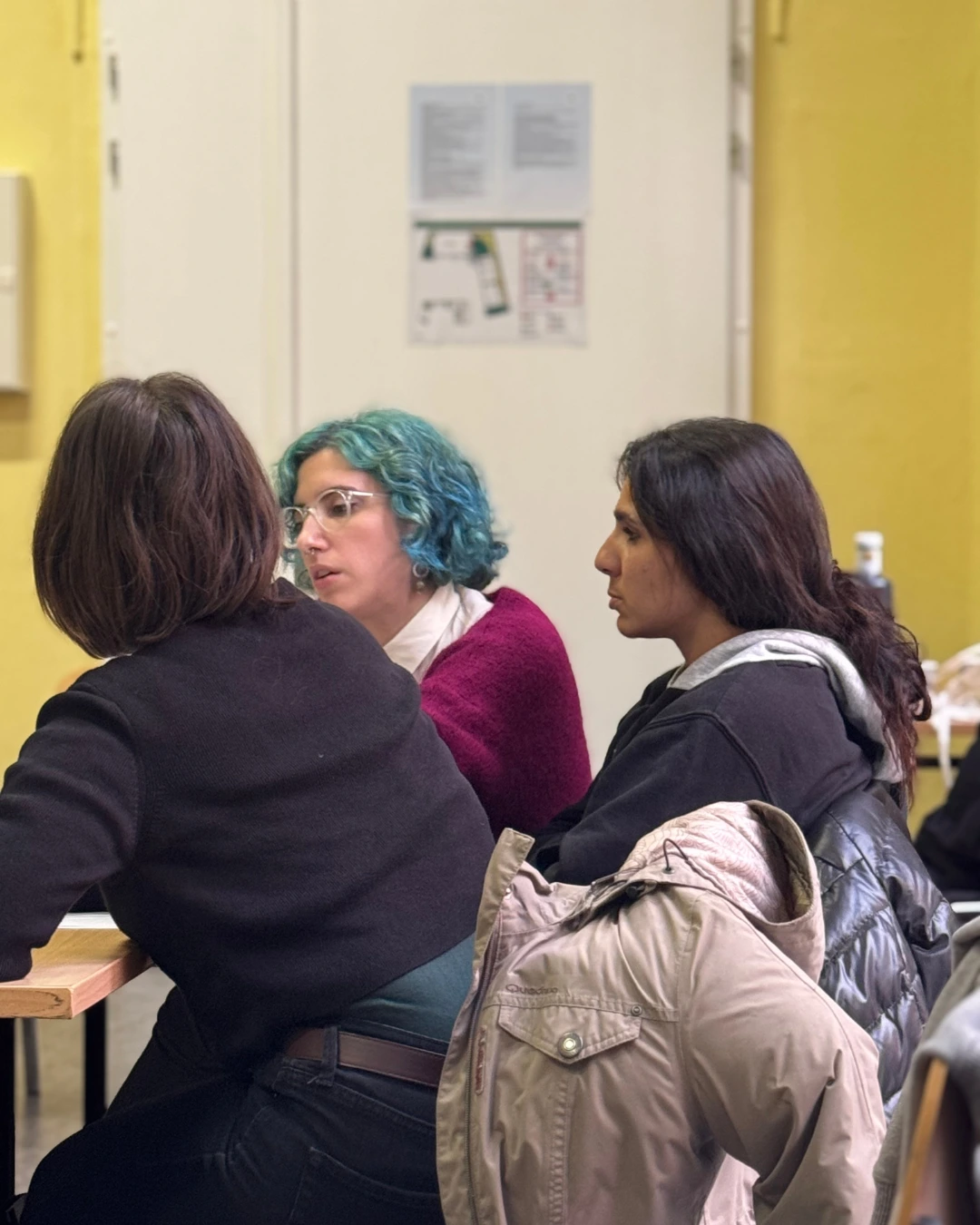
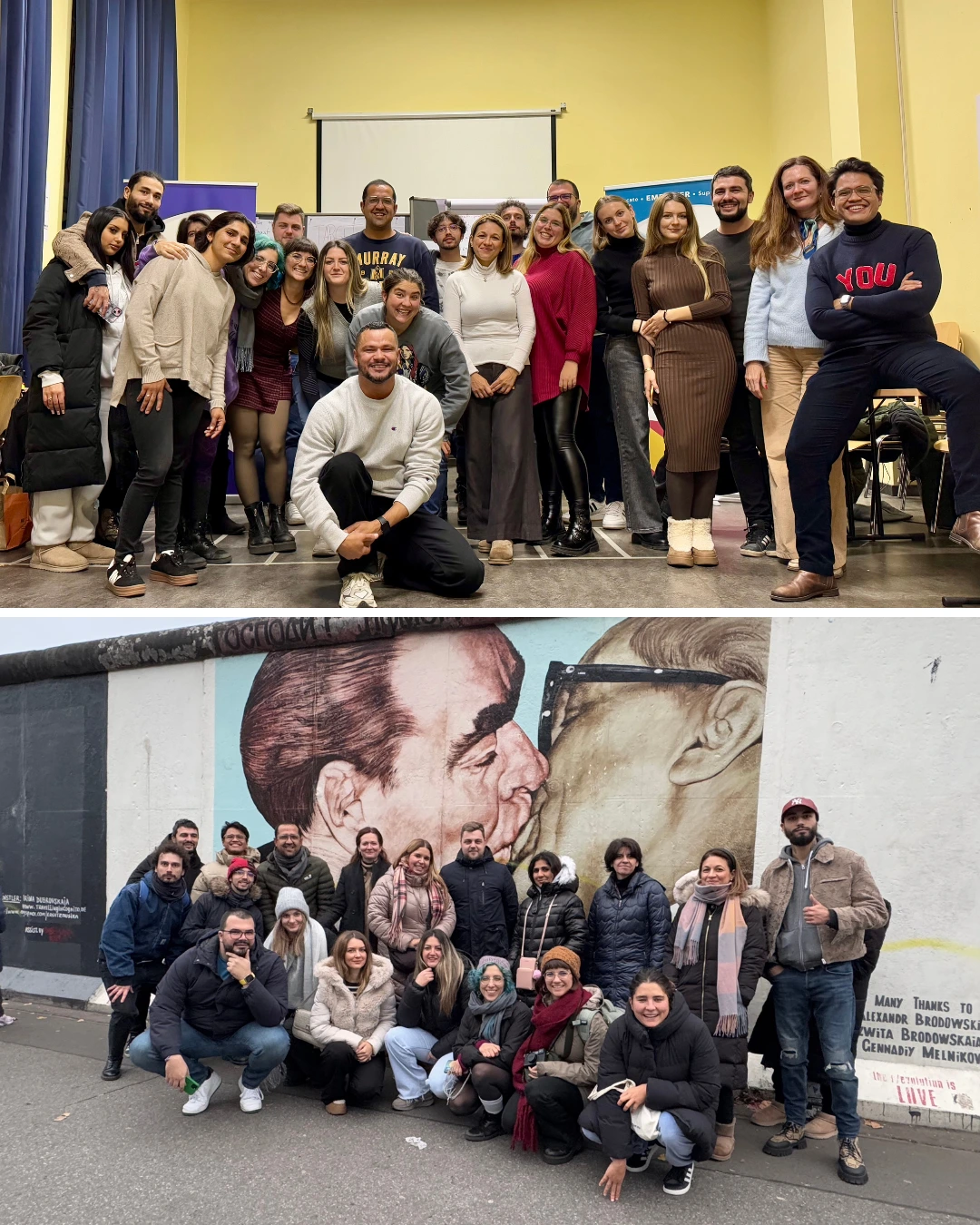
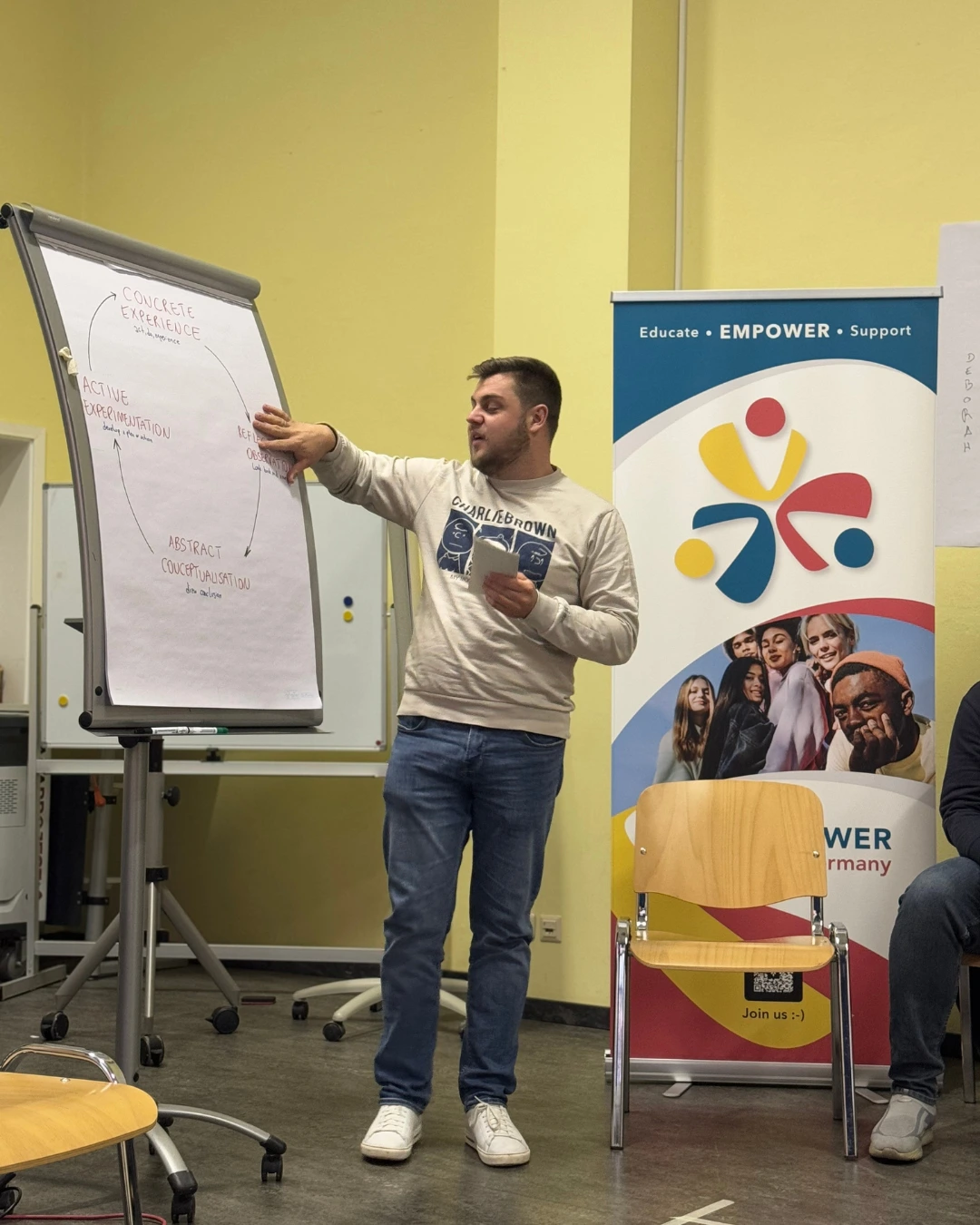
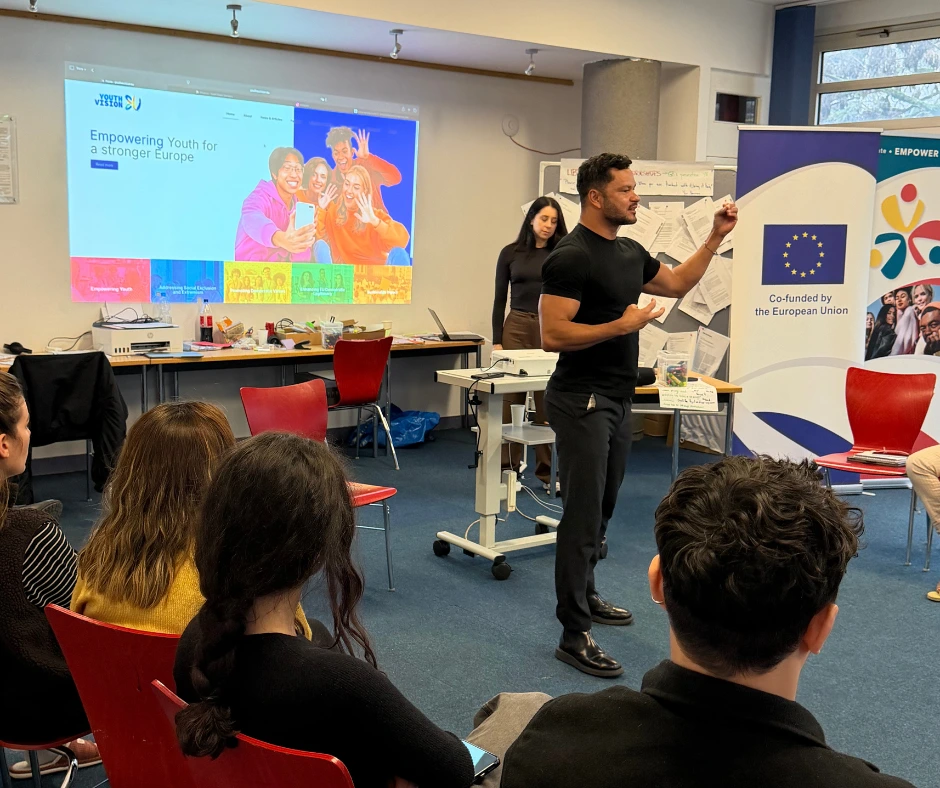
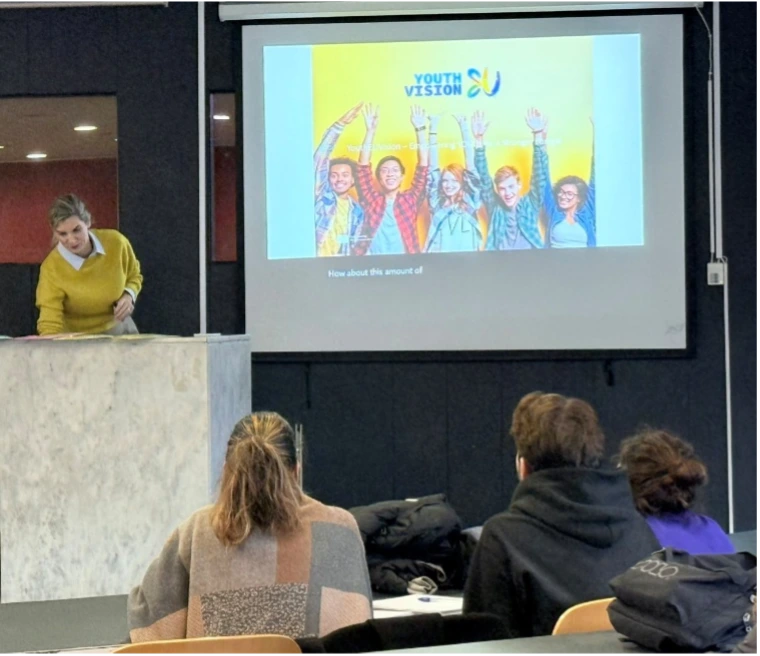
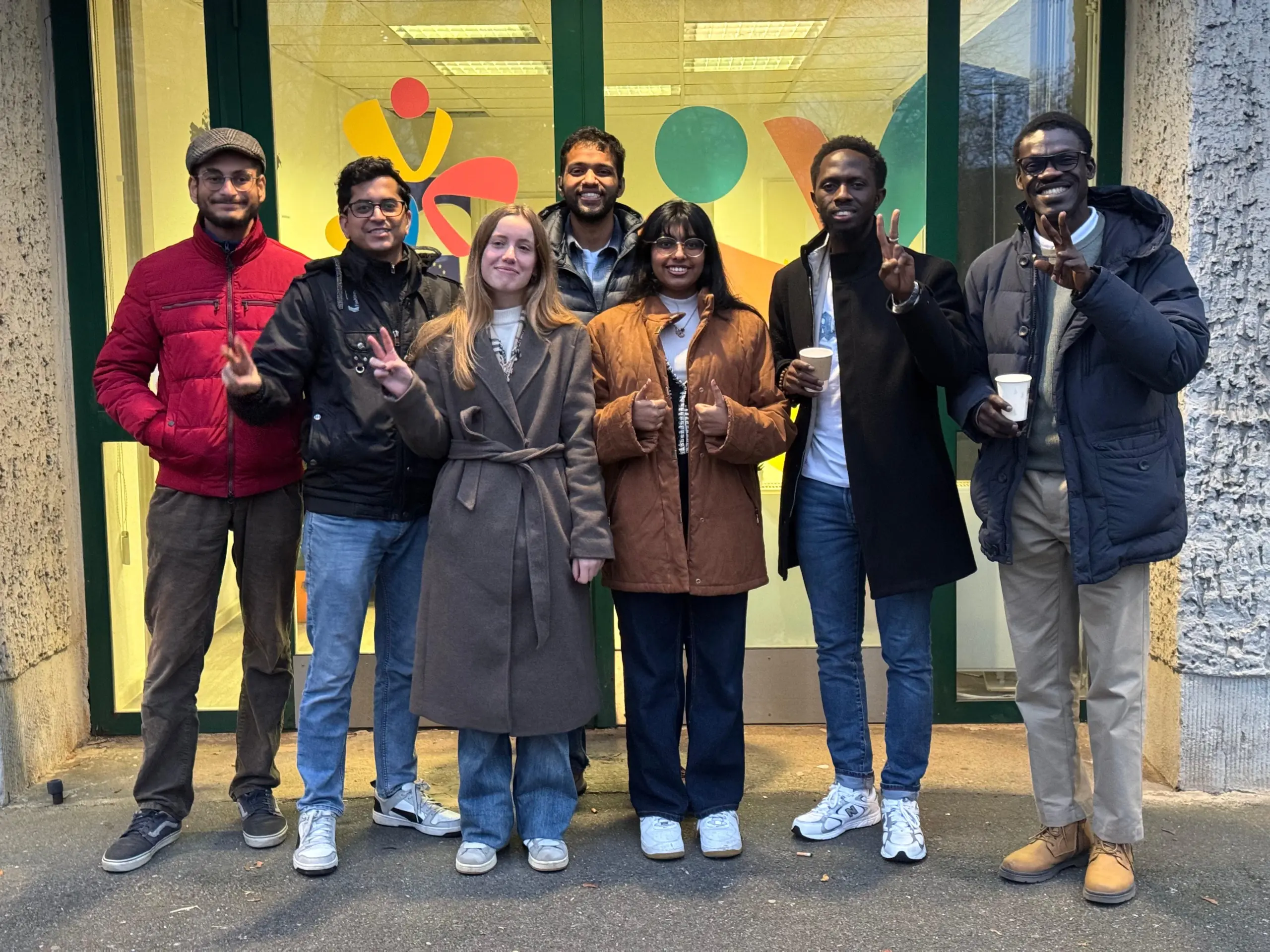
As part of the YouthEUvision: Empowering Youth for a Strong Europe project Youth Power Germany organised a Training of Trainers (TOT) program in Berlin from 14th to 17th November 2024. The program brought together 24 trainers from six countries, including three representatives from each participating NGO, with the goal of equipping them with the skills and tools necessary to lead initiatives promoting active citizenship, decision-making, and democratic participation.
What’s About…
The training provided innovative tools and methods to better engage local youth in discussions on democratic values and participation. Trainers explored strategies for fostering active involvement and inclusive practices, ensuring they could effectively address challenges within their communities.
We were thrilled to meet in person with the entire consortium, making it a truly inspiring and collaborative experience for all involved.
Objectives and Focus
The training aimed to:
Content Overview
The program included a comprehensive agenda tailored to support participants in achieving these objectives:
Day 1: 14th November 2024
Day 2: 15th November 2024
Day 3: 16th November 2024
Day 4: 17th November 2024
Key Outcomes
The program successfully empowered participants by:
Material used:
Funded by the European Union. Views and opinions expressed are however those of the author(s) only and do not necessarily reflect those of the European Union or the European Education and Culture Executive Agency (EACEA). Neither the European Union nor EACEA can be held responsible for them.